
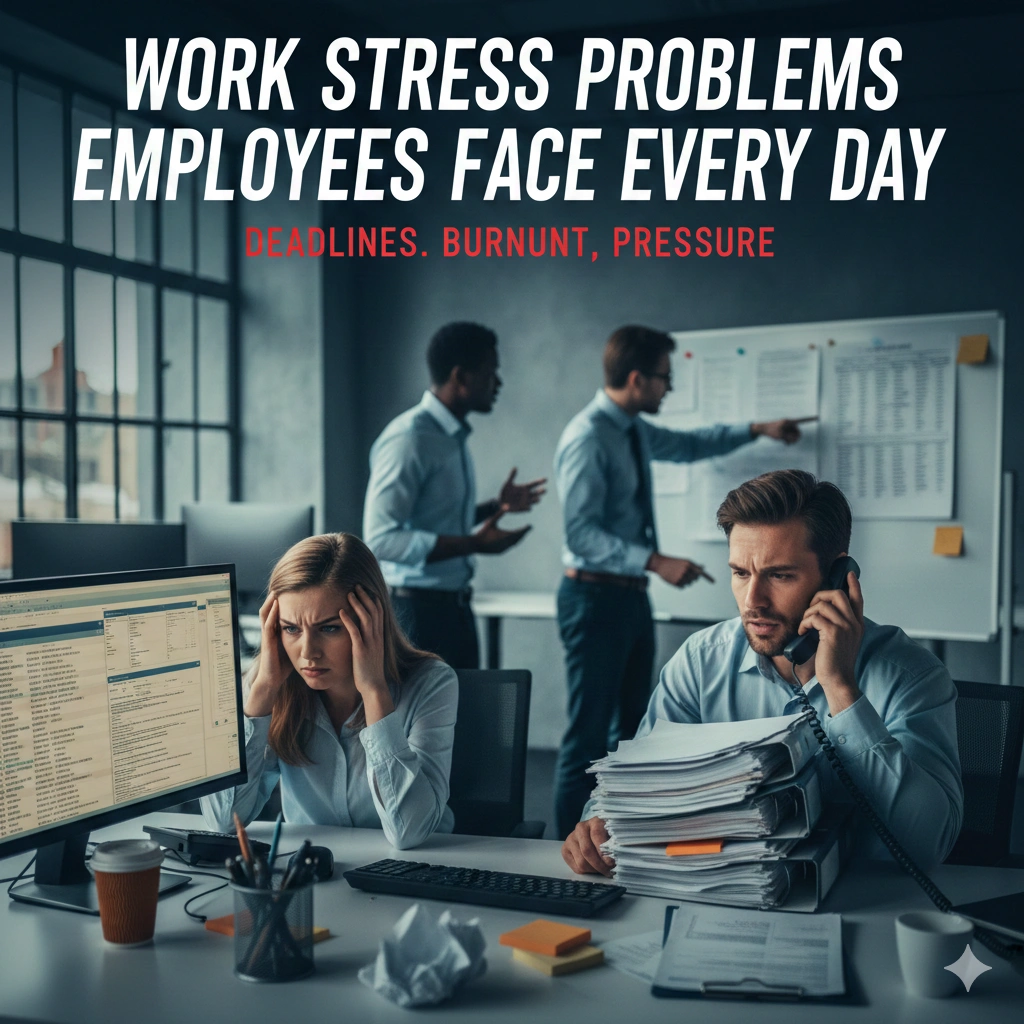
Introduction: Why Work Stress Has Become a Daily Reality
Work stress is no longer an occasional issue—it has become a constant part of daily life for millions of employees worldwide. In 2025, changing work models, economic uncertainty, technological pressure, and rising expectations have made stress an unavoidable reality across industries. Whether someone works in a corporate office, a startup, healthcare, education, retail, or remote roles, stress shows up in different forms but with similar consequences: burnout, anxiety, reduced productivity, and declining mental health.
Unlike earlier decades, today’s work stress is not limited to heavy workloads alone. It is deeply connected to job insecurity, unrealistic performance metrics, digital overload, toxic work cultures, lack of growth, and blurred boundaries between personal and professional life. Employees are expected to do more with fewer resources, adapt faster, and stay constantly available—often at the cost of their well-being.
This article explores the most common work stress problems employees face every day, why they are increasing, how they affect individuals and organizations, and what can be done to manage them effectively in the modern workplace.
1. Excessive Workload and Unrealistic Deadlines
One of the most persistent sources of daily stress is excessive workload. Many employees are assigned tasks meant for multiple people, especially after layoffs or cost-cutting measures. Organizations often expect employees to “stretch” without adjusting deadlines or compensation.
Unrealistic deadlines add pressure, forcing workers to rush, multitask excessively, and sacrifice quality. Over time, this constant urgency creates chronic stress, sleep issues, and emotional exhaustion. Employees feel they are always behind, no matter how hard they work.
This problem is especially common in corporate offices, IT, marketing, media, and startups, where speed is prioritized over sustainability.
2. Job Insecurity and Fear of Layoffs
In 2025, job security is one of the biggest stress factors employees face daily. Economic fluctuations, automation, artificial intelligence, mergers, and restructuring have made layoffs common across industries.
Even high-performing employees live with the fear of sudden termination. This uncertainty creates constant anxiety, making it difficult to focus, plan for the future, or feel loyal to an organization. Employees often overwork themselves just to appear indispensable, which further increases stress.
Job insecurity doesn’t just affect mental health—it also impacts physical well-being, relationships, and long-term career confidence.
3. Poor Work-Life Balance
Work-life balance has become one of the most talked-about but least achieved aspects of modern employment. Remote and hybrid work models, while offering flexibility, have blurred boundaries between work and personal life.
Many employees feel pressured to respond to emails, messages, and calls even after office hours. Weekends and holidays are no longer fully disconnected from work. This constant availability leads to emotional fatigue and prevents proper recovery.
Without clear boundaries, employees struggle to rest, pursue hobbies, or spend quality time with family—making stress a daily companion.
4. Toxic Work Culture and Office Politics
A toxic work environment can be more stressful than workload itself. Office politics, favoritism, gossip, lack of transparency, and unhealthy competition create emotional tension that employees face every day.
Employees working under toxic managers often experience fear, self-doubt, and chronic stress. Micromanagement, public criticism, unrealistic expectations, and lack of appreciation slowly erode confidence and motivation.
Such environments make employees feel unsafe and undervalued, leading to anxiety, disengagement, and high turnover rates.
5. Lack of Recognition and Appreciation
Feeling unrecognized is a silent but powerful stressor. Many employees put in long hours and deliver results, yet receive little acknowledgment for their efforts.
When hard work goes unnoticed, employees begin to question their value. This emotional stress builds over time, causing frustration, resentment, and decreased morale. Lack of appreciation often leads to disengagement and quiet quitting.
Recognition doesn’t always require promotions or bonuses—simple feedback, appreciation, and respect can significantly reduce daily stress.
6. Pressure to Upskill and Stay Relevant
With rapid technological change, employees constantly feel pressure to upgrade their skills. While learning is beneficial, the fear of becoming obsolete creates stress, especially for mid-career and senior professionals.
Employees are expected to learn new tools, software, and processes—often outside working hours. Balancing job responsibilities with continuous learning can be overwhelming.
This pressure is particularly intense in technology-driven fields, where skills become outdated quickly and competition is high.
7. Poor Communication and Unclear Expectations
Unclear job roles, vague instructions, and inconsistent communication create confusion and stress. Employees often struggle to understand what is expected of them, leading to mistakes, rework, and frustration.
Poor communication between management and staff increases anxiety, especially when feedback is delayed or inconsistent. Employees may feel they are always guessing priorities rather than working with clarity.
Clear communication is one of the simplest ways to reduce daily work stress, yet it remains a common issue in many organizations.
8. Long Working Hours and Burnout
Extended working hours have become normalized in many industries. Employees often work beyond official hours to meet deadlines or prove commitment.
Over time, long hours lead to burnout—a state of physical, emotional, and mental exhaustion. Burnout reduces productivity, creativity, and engagement while increasing stress, irritability, and health problems.
Many employees ignore early signs of burnout until it severely affects their performance and personal life.
9. Mental Health Stigma at Work
Despite increased awareness, mental health stigma still exists in many workplaces. Employees hesitate to talk about stress, anxiety, or depression due to fear of judgment or career consequences.
This silence forces employees to manage stress alone, worsening mental health issues. Lack of support systems makes daily challenges feel heavier and more isolating.
Organizations that fail to address mental health openly contribute to long-term stress and disengagement among employees.
10. Inadequate Compensation and Financial Stress
When salaries do not match workload or rising living costs, financial stress becomes a daily burden. Many employees struggle to manage expenses, savings, and family responsibilities despite working full-time.
Financial insecurity adds another layer of anxiety, making work stress more intense. Employees may feel trapped in jobs they dislike simply because they cannot afford to leave.
Fair compensation plays a critical role in reducing stress and improving job satisfaction.
11. Performance Pressure and Constant Evaluation
Modern workplaces rely heavily on performance metrics, targets, and KPIs. While accountability is important, constant evaluation creates pressure and fear of failure.
Employees feel they are always being measured, monitored, and compared. This environment discourages experimentation and learning from mistakes, increasing stress levels.
When performance pressure outweighs support, employees become anxious rather than motivated.
12. Lack of Career Growth Opportunities
Feeling stuck in a role with no growth prospects is a major stressor. Employees want to see progress in their careers—whether through promotions, learning opportunities, or new responsibilities.
When growth is limited, employees experience frustration and loss of motivation. Daily work begins to feel meaningless, increasing emotional stress and dissatisfaction.
Career stagnation is one of the key reasons employees experience long-term stress and eventually quit.
13. Remote Work Isolation
While remote work offers flexibility, it can also lead to isolation. Lack of social interaction, informal conversations, and team bonding increases feelings of loneliness.
Remote employees may struggle with communication gaps, misunderstandings, and lack of visibility, which adds stress and insecurity.
Human connection remains essential for emotional well-being, even in digital workplaces.
14. Physical Health Neglect Due to Work Stress
Work stress often leads to neglect of physical health. Employees skip meals, exercise less, and suffer from poor posture, headaches, and fatigue.
Sedentary work combined with stress increases the risk of chronic health issues. Physical discomfort further contributes to mental stress, creating a cycle that is difficult to break.
Healthy workplaces encourage balance, movement, and wellness support.
15. Fear of Speaking Up
Many employees hesitate to share ideas, concerns, or feedback due to fear of negative consequences. This lack of psychological safety creates internal stress.
When employees feel unheard, frustration builds silently. Over time, this emotional pressure reduces engagement and trust in leadership.
Open and inclusive cultures significantly reduce daily stress by empowering employees to speak freely.
How Daily Work Stress Affects Employees and Organizations
Chronic work stress impacts both individuals and organizations. Employees experience anxiety, burnout, reduced motivation, and health problems. Organizations face lower productivity, higher absenteeism, increased turnover, and poor morale.
Ignoring work stress leads to long-term damage, while addressing it improves performance, loyalty, and workplace culture.
Practical Ways Employees Can Manage Daily Work Stress
- Set clear boundaries between work and personal time
- Prioritize tasks and avoid multitasking
- Take regular breaks during the workday
- Practice stress-relief techniques like meditation or exercise
- Communicate openly with managers about workload
- Focus on skill development at a manageable pace
- Seek support from colleagues or professionals
What Employers Can Do to Reduce Work Stress
- Encourage realistic workloads and deadlines
- Promote work-life balance
- Support mental health initiatives
- Recognize and appreciate employee efforts
- Improve communication and transparency
- Offer fair compensation and growth opportunities
- Build a positive and inclusive work culture
Conclusion: Addressing Work Stress Is No Longer Optional
Work stress problems employees face every day are not temporary challenges—they are deeply rooted in modern work systems. In 2025, addressing stress is essential for both personal well-being and organizational success.
Employees deserve workplaces that support growth, balance, and mental health. Employers who prioritize employee well-being will build stronger, more resilient teams. Recognizing and addressing daily work stress is the first step toward healthier, more sustainable careers.