
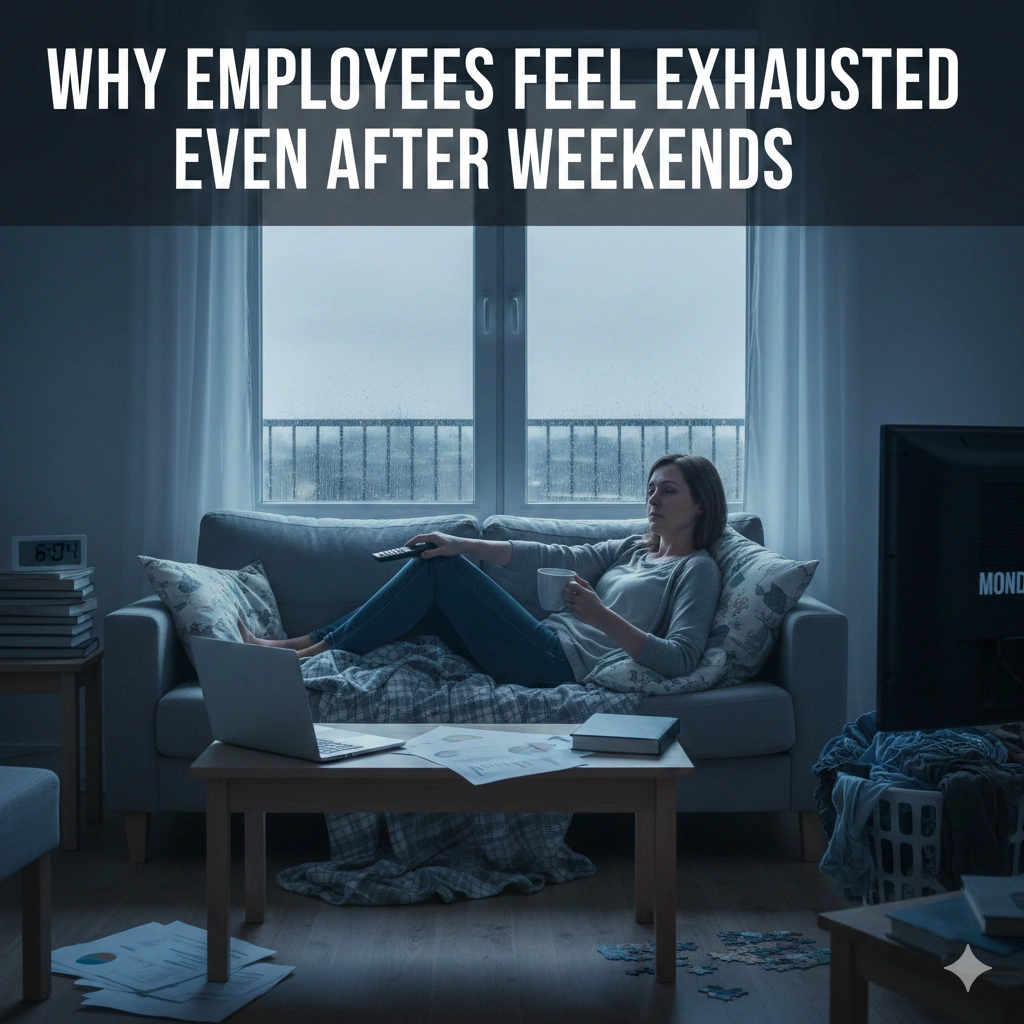
Introduction: The Weekend That Doesn’t Recharge
Weekends are supposed to be a reset button. They promise rest, relaxation, and recovery from the pressures of the workweek. Yet for millions of employees today, Monday arrives with the same exhaustion they felt on Friday—sometimes even worse. Feeling tired after a busy week is normal, but feeling drained even after two days off signals a deeper problem.
In modern workplaces, exhaustion has become a constant state rather than a temporary condition. Employees often return to work after weekends still feeling mentally foggy, emotionally drained, and physically tired. This ongoing fatigue affects productivity, motivation, health, and overall life satisfaction.
This article explores why employees feel exhausted even after weekends, examining the hidden causes behind persistent fatigue, how work culture contributes to it, and what employees and organizations can do to restore real energy and balance.
Understanding the Difference Between Tiredness and Exhaustion
Before addressing the causes, it’s important to understand the difference between being tired and being exhausted.
- Tiredness is short-term and usually resolved with sleep or rest.
- Exhaustion is deeper, long-lasting, and affects both mind and body.
Exhaustion often includes emotional fatigue, mental overload, and lack of motivation—issues that a simple weekend off cannot fix.
The Modern Workweek Never Truly Ends
1. Work Follows Employees Home
Emails, messages, calls, and notifications don’t stop on Friday evening. Many employees remain mentally connected to work throughout the weekend, checking emails “just in case” or worrying about upcoming tasks.
This constant mental engagement prevents the brain from fully resting, making weekends ineffective for recovery.
2. Anticipatory Stress About Mondays
For many employees, weekends are overshadowed by anxiety about the coming workweek. Thoughts like unfinished tasks, deadlines, meetings, or difficult managers occupy the mind.
This anticipatory stress keeps the nervous system active, reducing relaxation even during supposed rest days.
Sleep Quality Is Poorer Than People Realize
3. Inconsistent Sleep Schedules
On weekends, many people sleep late, wake up late, or binge-watch shows at night. This disrupts the body’s internal clock, making Monday mornings harder.
Even if people sleep longer, poor sleep quality prevents real recovery.
4. Mental Overstimulation Before Bed
Scrolling social media, watching intense content, or thinking about work late at night overstimulates the brain. This reduces deep sleep, which is essential for mental and physical restoration.
Emotional Exhaustion Is the Real Culprit
5. Burnout Cannot Be Fixed in Two Days
Emotional exhaustion caused by burnout builds over weeks or months. A short weekend break is not enough to undo prolonged stress, overload, or dissatisfaction at work.
Burnout drains energy at a deeper level, making rest feel ineffective.
6. Lack of Meaning or Motivation at Work
When employees feel disconnected from their work purpose, even light workloads feel exhausting. Emotional disengagement drains energy faster than physical effort.
Work that lacks meaning often leads to chronic fatigue.
Weekends Are Often Not Truly Restful
7. Weekends Are Filled With Chores and Responsibilities
Many employees use weekends to catch up on household work, errands, family obligations, or personal tasks neglected during the week.
Instead of resting, weekends become another form of work.
8. Social Obligations Can Be Draining
While social interaction can be enjoyable, constant social commitments without downtime can be exhausting, especially for introverted individuals.
True rest requires quiet, unstructured time.
Constant Cognitive Overload During the Week
9. Too Many Decisions, Too Little Mental Recovery
Modern jobs demand continuous decision-making, multitasking, and problem-solving. This mental overload accumulates throughout the week.
By the weekend, the brain is depleted, and two days are not enough to fully recharge.
10. Information Overload
Emails, messages, meetings, news, and digital content overwhelm the brain daily. Even during weekends, people continue consuming large amounts of information, preventing mental rest.
Poor Work-Life Boundaries
11. Blurred Boundaries in Remote and Hybrid Work
Remote work often eliminates physical separation between work and personal life. Employees may work longer hours without realizing it.
Without clear boundaries, the brain remains in “work mode” even on weekends.
12. Guilt Around Resting
Some employees feel guilty for resting, believing they should always be productive. This mindset prevents genuine relaxation and reinforces exhaustion.
Physical Factors Behind Persistent Fatigue
13. Sedentary Lifestyle
Long hours of sitting reduce circulation and energy levels. Without regular movement, fatigue becomes chronic.
Weekends spent resting passively do not counteract weekday inactivity.
14. Poor Nutrition and Hydration
Busy workweeks often lead to unhealthy eating habits. Poor nutrition affects energy levels, mood, and sleep quality.
Fatigue caused by nutritional imbalance does not disappear over a weekend.
15. Chronic Stress and Hormonal Imbalance
Prolonged stress keeps cortisol levels high, preventing proper recovery. The body remains in a state of alertness even during rest.
This physiological stress response contributes to ongoing exhaustion.
Mental Health Factors
16. Anxiety and Depression
Mental health conditions often cause persistent fatigue regardless of rest. Anxiety keeps the mind active, while depression reduces energy and motivation.
Weekends alone cannot resolve these deeper issues.
17. Emotional Suppression at Work
Many employees hide emotions at work to appear professional. Suppressing feelings requires energy and leads to emotional exhaustion over time.
Why Exhaustion Feels Worse on Sundays
18. The “Sunday Scaries”
As the weekend ends, anxiety about Monday intensifies. This stress reduces relaxation and disrupts sleep, making employees feel more tired when the week begins.
19. Feeling That the Weekend Was Too Short
When employees feel they didn’t rest enough, frustration adds to exhaustion. The perception of insufficient recovery worsens fatigue.
Long-Term Impact of Weekend Fatigue
Persistent exhaustion affects:
- Productivity and focus
- Emotional regulation
- Physical health
- Job satisfaction
- Personal relationships
Over time, this fatigue can evolve into burnout or serious health issues.
How Employees Can Recover Real Energy
Create Mental Separation From Work
- Avoid checking work messages on weekends
- Set clear digital boundaries
Prioritize Quality Sleep
- Maintain consistent sleep schedules
- Reduce screen time before bed
Use Weekends for True Rest
- Balance chores with relaxation
- Allow unstructured downtime
Move the Body
- Light exercise improves energy and mood
Address Emotional Exhaustion
- Reflect on work stressors
- Seek support when needed
What Employers Can Do to Help
- Encourage disconnecting after work hours
- Respect personal time
- Promote realistic workloads
- Support mental health initiatives
- Foster a culture that values rest
Healthy employees return to work energized and productive.
Redefining Rest in Modern Life
Rest is not just the absence of work. It includes mental calm, emotional safety, physical movement, and meaningful downtime.
Without redefining rest, weekends will continue to feel insufficient.
Conclusion: Exhaustion After Weekends Is a Warning Sign
Feeling exhausted even after weekends is not laziness or weakness. It is a signal that modern work demands more energy than people can sustainably give.
In today’s world, recovery requires more than two days off—it requires healthier work cultures, better boundaries, and intentional rest. Addressing weekend exhaustion is essential for long-term well-being, productivity, and job satisfaction.