Introduction
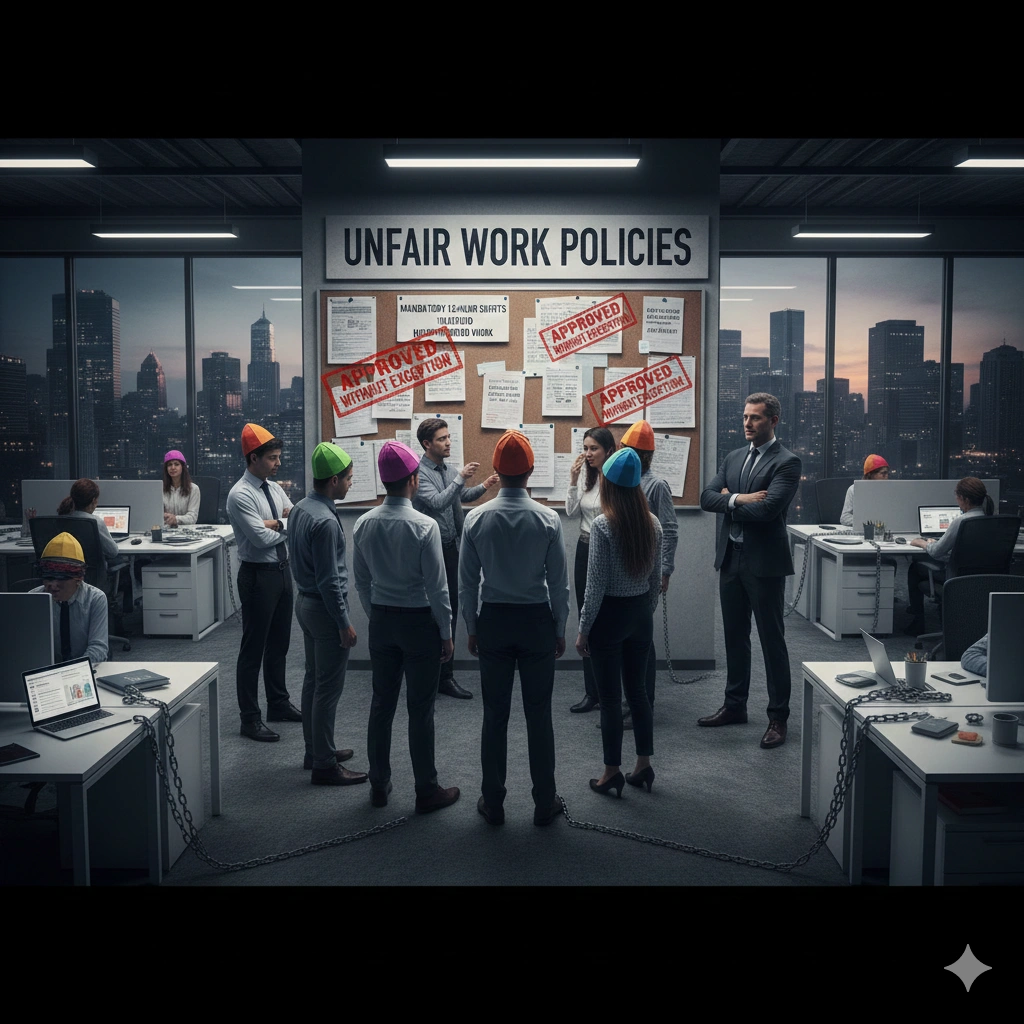
Workplace policies are designed to create structure, fairness, and consistency within an organization. Ideally, these policies protect both employers and employees, ensuring smooth operations and mutual respect. However, in many workplaces, unfair work policies have become a serious problem, negatively affecting employees’ rights, morale, productivity, and mental well-being. When policies favor employers disproportionately or are applied inconsistently, employees often feel exploited, undervalued, and powerless.
Unfair work policies can appear in many forms—unequal pay structures, biased leave rules, unrealistic attendance requirements, lack of grievance mechanisms, or discriminatory promotion practices. In today’s competitive job market, employees are expected to give their best performance, but unfair policies often place excessive burdens on them without adequate support or compensation.
This article explores the reality of unfair work policies employees face, their causes, types, impacts, and long-term consequences, along with practical strategies organizations can adopt to build fairer and more ethical workplaces.
Understanding Unfair Work Policies
Unfair work policies are rules, regulations, or practices that disadvantage employees, either intentionally or unintentionally. These policies may violate labor laws, ethical standards, or basic principles of fairness. Even when policies are legal, they can still be unfair if they create imbalance, discrimination, or unreasonable expectations.
Unfair policies often emerge when organizations prioritize profit, control, or convenience over employee welfare.
Common Causes of Unfair Work Policies
1. Profit-Driven Management
Organizations focused solely on cost-cutting may introduce policies that reduce employee benefits or increase workload without compensation.
2. Lack of Employee Representation
When employees have no voice in policy-making, rules are often designed without considering their real-world impact.
3. Poor Leadership and Governance
Weak leadership may fail to review, update, or enforce policies fairly.
4. Outdated Policies
Some policies no longer match modern work environments but remain enforced rigidly.
5. Power Imbalance
Employers often hold more power, making it easier to impose unfair rules with little resistance.
Types of Unfair Work Policies Employees Face
1. Unfair Pay and Compensation Policies
- Wage disparities for the same role
- Delayed or unpaid overtime
- Lack of transparency in salary structures
Employees performing equal work should receive equal pay, yet many organizations fail to uphold this principle.
2. Biased Promotion and Appraisal Policies
- Favoritism in promotions
- Lack of clear performance criteria
- Subjective evaluations
Such policies discourage hard work and reward connections over competence.
3. Unreasonable Working Hours Policies
- Mandatory overtime without pay
- No clear work-hour limits
- Expectation of constant availability
These policies contribute significantly to burnout and work-life imbalance.
4. Restrictive Leave Policies
- Limited sick or personal leave
- Penalization for taking legally entitled leave
- Complicated approval processes
Employees often feel guilty or fearful about taking time off.
5. Attendance and Monitoring Policies
- Excessive surveillance
- Strict attendance penalties
- Lack of flexibility for emergencies
While accountability is important, over-monitoring erodes trust.
6. Discriminatory Workplace Policies
- Gender-biased maternity or paternity rules
- Unequal opportunities for marginalized groups
- Age or disability-based restrictions
Discriminatory policies violate both ethics and equality principles.
7. Punitive Disciplinary Policies
- Harsh penalties for minor mistakes
- No opportunity for explanation or appeal
- Public shaming or threats
Such policies create fear rather than accountability.
8. Contract and Job Security Policies
- Temporary contracts with no benefits
- Sudden termination clauses
- No notice periods
Job insecurity increases stress and reduces loyalty.
Impact of Unfair Work Policies on Employees
1. Decline in Employee Morale
When employees feel unfairly treated, motivation and enthusiasm drop sharply.
2. Increased Stress and Anxiety
Unpredictable rules and fear of punishment lead to constant mental pressure.
3. Reduced Productivity
Demotivated employees are less engaged and less efficient.
4. Loss of Trust in Management
Unfair policies damage the employer-employee relationship.
5. Higher Burnout Rates
Excessive demands with limited rewards push employees toward burnout.
Impact on Workplace Culture
Unfair work policies create toxic work environments characterized by:
- Fear-based management
- Internal competition
- Lack of collaboration
- Low transparency
Such cultures discourage innovation and teamwork.
Impact on Organizations
1. High Employee Turnover
Talented employees leave organizations that treat them unfairly.
2. Poor Employer Reputation
Negative reviews and word-of-mouth damage brand image.
3. Legal Risks
Unfair or illegal policies can lead to lawsuits and penalties.
4. Reduced Long-Term Growth
Organizations ignoring fairness struggle to sustain success.
Unfair Policies and Mental Health
Unfair work policies significantly affect mental health by causing:
- Chronic stress
- Depression
- Emotional exhaustion
- Low self-esteem
Employees may feel trapped, undervalued, or helpless.
Unfair Work Policies in Different Industries
Corporate Sector
Long working hours, unrealistic targets, and biased appraisals are common issues.
Manufacturing and Labor-Intensive Jobs
Unsafe working conditions and wage exploitation are major concerns.
IT and Tech Industry
Always-on availability, unpaid overtime, and contract instability affect employees.
Service Industry
Irregular schedules, limited leave, and low job security are widespread problems.
Role of HR in Addressing Unfair Policies
Human Resources departments play a critical role in ensuring fairness by:
- Reviewing policies regularly
- Ensuring legal compliance
- Handling grievances impartially
- Promoting transparent communication
HR must act as a bridge between employees and management.
Employee Awareness and Rights
Employees should:
- Understand labor laws
- Read employment contracts carefully
- Document unfair practices
- Seek legal or professional advice when needed
Awareness empowers employees to stand against unfair treatment.
How Organizations Can Create Fair Work Policies
1. Transparency
Clearly explain policies, expectations, and consequences.
2. Employee Involvement
Include employee feedback in policy development.
3. Equal Opportunity
Ensure fairness in pay, promotion, and growth opportunities.
4. Flexibility
Adapt policies to modern work needs and personal circumstances.
5. Regular Policy Reviews
Update rules to align with legal standards and employee needs.
Benefits of Fair Work Policies
Organizations with fair policies enjoy:
- Higher employee engagement
- Better productivity
- Stronger loyalty
- Positive workplace culture
- Improved employer branding
Fairness is not just ethical—it is strategic.
The Future of Work Policies
The future workplace emphasizes:
- Employee well-being
- Diversity and inclusion
- Flexibility
- Transparency
Organizations that adapt will attract and retain top talent.
Conclusion
Unfair work policies employees face are a significant challenge in today’s professional world. While policies are necessary for structure and discipline, they must be designed and implemented with fairness, empathy, and transparency. When employees are treated unfairly, the consequences extend beyond individuals, affecting organizational culture, reputation, and performance.
Creating fair work policies is a shared responsibility of leadership, HR, and employees. By prioritizing equity and respect, organizations can build healthier workplaces where employees feel valued, secure, and motivated to contribute their best.