
Introduction
Remote jobs are often portrayed as the ultimate career dream. No daily commute, flexible schedules, working in comfortable clothes, and the freedom to work from anywhere in the world. Social media posts, job ads, and success stories make remote work look effortless and ideal.
However, behind this appealing image lies a reality few people talk about. While remote work offers undeniable benefits, it also brings hidden challenges that can significantly affect employees’ mental health, productivity, career growth, and personal lives. Many professionals only realize these difficulties after spending months—or even years—working remotely.
This article explores the remote job challenges no one tells you about, uncovering the lesser-known struggles employees face every day. Understanding these challenges can help job seekers make informed decisions and help organizations create healthier remote work cultures.
1. The Myth of Total Freedom
One of the biggest misconceptions about remote jobs is complete freedom. While you may work from home or another location, your time is often tightly controlled by deadlines, meetings, and expectations.
Many remote workers are required to be available during fixed hours, attend back-to-back virtual meetings, or adjust their schedules for global teams. Instead of flexibility, employees often feel tied to their screens all day.
The reality is that remote work offers location independence, not unlimited freedom.
2. Always “On” Culture
Remote jobs often come with an unspoken expectation to be constantly available. Since you are not physically leaving an office, colleagues and managers may assume you can respond at any time.
Late-night messages, early-morning calls, and weekend emails become common. Employees feel pressure to reply instantly to prove they are working.
This “always on” culture leads to burnout, stress, and difficulty disconnecting from work.
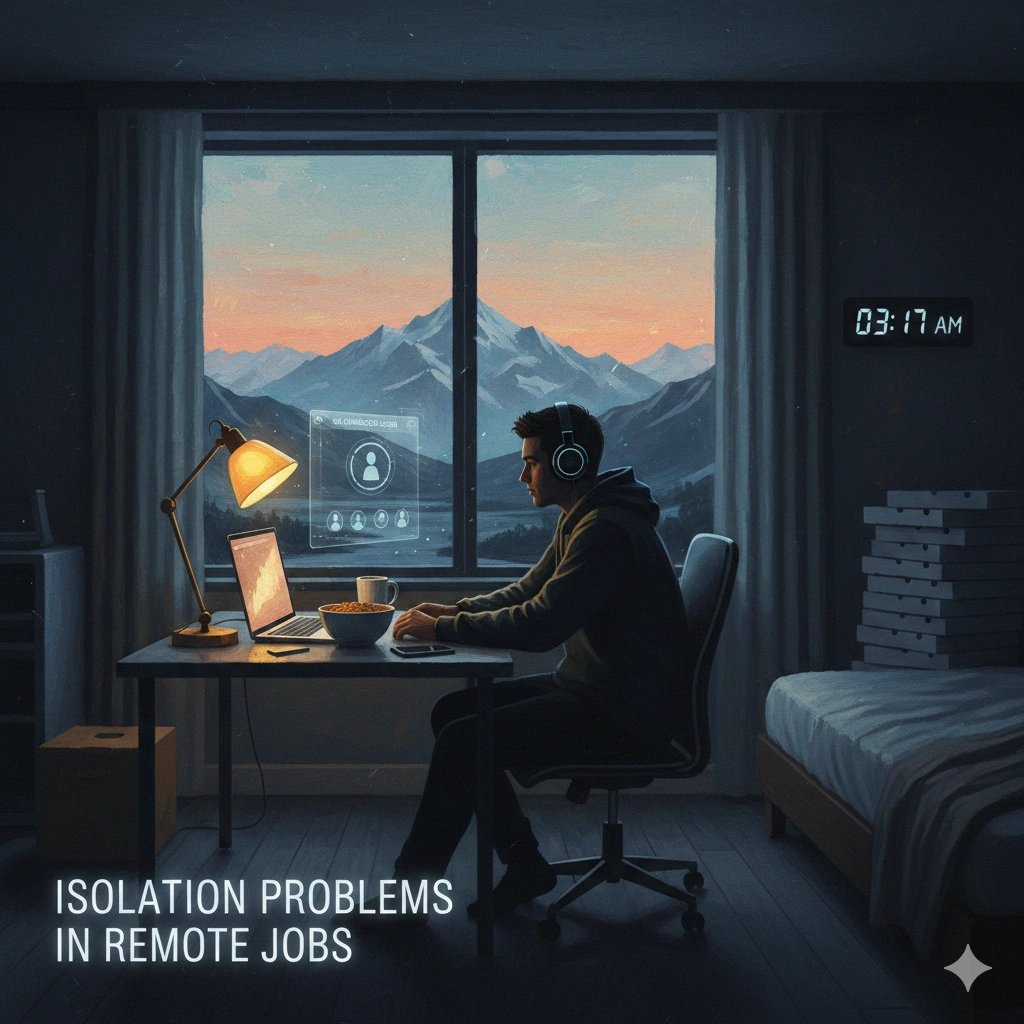
3. Isolation Hits Harder Than Expected
Many people underestimate how isolating remote work can be. Without office conversations, shared lunches, or casual interactions, employees may feel disconnected from their teams.
Virtual meetings rarely replace real human connection. Over time, loneliness can impact motivation, creativity, and emotional well-being.
For remote workers living alone, this isolation can feel overwhelming and lead to anxiety or depression.
4. Lack of Emotional Support at Work
In traditional offices, emotional support often comes naturally—quick chats, supportive gestures, or informal check-ins. In remote jobs, these moments are rare.
Managers may focus only on tasks and deadlines, unintentionally overlooking employees’ emotional needs. When someone struggles, it’s harder for others to notice.
This lack of emotional support can make remote workers feel invisible and undervalued.
5. Communication Is More Exhausting Than It Seems
Remote work depends heavily on written and virtual communication. Emails, messages, video calls, and collaboration tools dominate the workday.
Communicating clearly takes more effort without facial expressions or body language. Misunderstandings are common, and explaining simple ideas may take longer.
Constant communication also leads to mental fatigue, especially when switching between multiple platforms throughout the day.
6. Zoom Fatigue and Meeting Overload
Remote jobs often replace quick office conversations with scheduled video meetings. What could have been a five-minute discussion becomes a 30-minute call.
Too many virtual meetings cause “Zoom fatigue,” leaving employees mentally drained. Watching screens, maintaining eye contact, and staying attentive for hours is exhausting.
Ironically, excessive meetings reduce productivity instead of improving collaboration.
7. Career Growth Feels Uncertain
One challenge rarely discussed is how remote work can affect career progression. Visibility matters in many organizations, and remote employees often worry about being overlooked.
Without face-to-face interactions, it’s harder to showcase skills, build relationships with leadership, or be considered for promotions.
Remote workers may feel stuck, unsure whether their efforts are truly recognized.
8. Networking Opportunities Are Limited
Career growth often depends on networking, mentorship, and informal conversations. Remote jobs limit these opportunities.
Virtual networking feels forced and transactional compared to natural office interactions. Employees may struggle to form meaningful professional relationships.
Over time, limited networking can impact long-term career development.
9. Home Isn’t Always a Productive Workspace
Many people imagine working from home as peaceful and comfortable. In reality, home environments can be noisy, crowded, or distracting.
Family members, children, pets, household chores, and limited space make it difficult to focus. Not everyone can afford a dedicated home office.
Working in unsuitable conditions affects concentration, posture, and overall productivity.
10. Physical Health Slowly Declines
Remote work often reduces physical movement. Without commuting or walking between meetings, employees spend long hours sitting.
Poor posture, lack of exercise, and excessive screen time cause back pain, neck strain, eye problems, and weight gain.
These health issues develop gradually, making them easy to ignore until they become serious.
11. Mental Health Struggles Go Unnoticed
Mental health challenges are common among remote workers but often go unnoticed. Stress, anxiety, burnout, and depression can quietly build up.
Without regular human interaction, employees may feel emotionally detached from work. Managers may not recognize warning signs through screens.
The stigma around mental health also prevents many employees from speaking up.
12. Difficulty Switching Off After Work
When your workspace is also your living space, it’s hard to mentally “leave” work. The laptop is always nearby, and unfinished tasks stay on your mind.
Employees may check emails late at night or continue working during personal time. Over time, this erodes work-life balance.
The inability to switch off affects sleep quality, relationships, and overall happiness.
13. Financial Costs Shift to Employees
Remote work is often seen as cost-saving, but many hidden expenses fall on employees. Electricity bills, high-speed internet, office furniture, and equipment costs add up.
Not all companies reimburse these expenses. Employees may spend their own money to maintain productivity.
This financial burden is rarely discussed in remote job advertisements.
14. Job Security Feels Fragile
Remote jobs can sometimes feel less secure. With teams spread globally, employees may worry about being easily replaceable.
Companies can hire talent from anywhere, increasing competition. This creates anxiety about job stability and performance pressure.
The fear of layoffs or contract termination is often stronger in remote roles.
15. Time Zone Challenges
Remote teams often operate across different time zones. While this allows global collaboration, it also disrupts personal schedules.
Employees may attend meetings early in the morning or late at night. Irregular hours affect sleep patterns and social life.
Time zone misalignment increases fatigue and reduces overall well-being.
16. Lack of Clear Boundaries With Family
Working from home blurs boundaries not just with work but also with family. Family members may assume you are available since you are physically present.
Interruptions during meetings, expectations to handle household tasks, and difficulty setting limits create tension.
Balancing professional responsibilities with family expectations becomes emotionally draining.
17. Performance Is Harder to Measure Fairly
Remote work often relies on output rather than effort, which can be unfair in some roles. Employees who work quietly may go unnoticed compared to those who speak more in meetings.
Lack of clear performance metrics leads to confusion and insecurity. Employees may overwork just to prove value.
This pressure reduces job satisfaction and trust.
18. Training and Learning Gaps
Onboarding and training are more challenging in remote settings. New employees may struggle to understand processes, tools, or company culture.
Learning through virtual sessions lacks hands-on experience. Asking questions may feel awkward or disruptive.
As a result, skill development can slow down, especially for early-career professionals.
19. Company Culture Feels Weak
Company culture is hard to build remotely. Virtual events and online activities often feel artificial and forced.
Employees may feel disconnected from organizational values and mission. Without a strong culture, engagement and loyalty decline.
This emotional distance impacts long-term commitment to the company.
20. The Pressure to Self-Motivate Constantly
Remote jobs require high levels of self-discipline and motivation. Without supervision or structure, employees must manage their time independently.
Some thrive in this environment, but others struggle with procrastination and focus. Constant self-motivation becomes mentally exhausting.
This pressure is rarely acknowledged but deeply felt.
Conclusion
Remote work is not the effortless lifestyle many imagine. While it offers flexibility and freedom, it also brings hidden challenges that impact mental health, physical well-being, productivity, and career growth.
Understanding the remote job challenges no one tells you about helps employees set realistic expectations and encourages companies to provide better support. Clear boundaries, mental health resources, fair performance evaluation, and strong communication are essential for sustainable remote work.
Remote jobs can be rewarding—but only when their challenges are acknowledged and addressed honestly.