Introduction
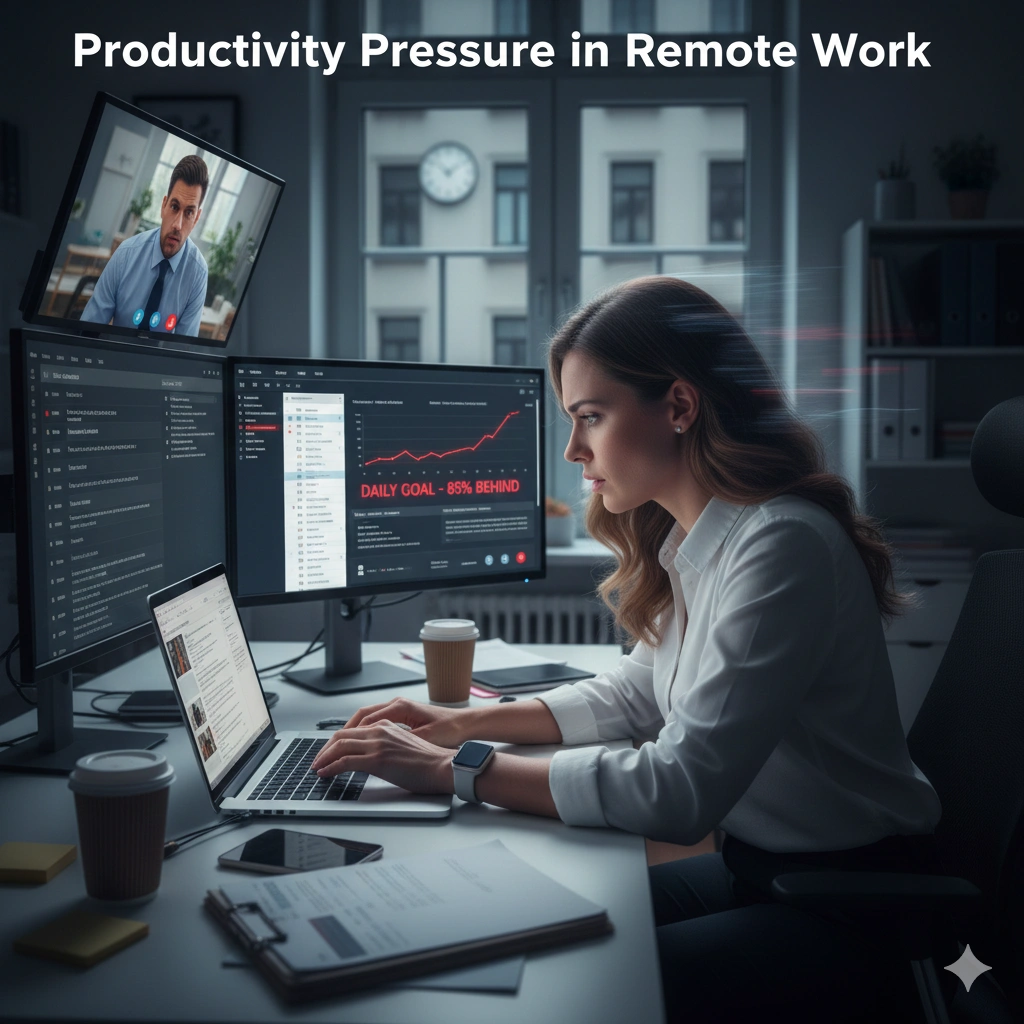
Remote work has redefined how people view productivity. Without office walls, physical supervision, or fixed schedules, employees are often judged by output rather than presence. While this shift has advantages, it has also created a powerful and often invisible force: productivity pressure.
In remote work environments, many employees feel the constant need to prove that they are working hard enough. The fear of being seen as “less productive” pushes workers to overperform, stay online longer, respond instantly, and take on more tasks than they can reasonably manage. Over time, this pressure negatively affects mental health, work quality, and long-term performance.
This article explores the real causes of productivity pressure in remote work, how it affects employees, why it is growing, and what both employees and employers can do to create healthier, more sustainable remote work cultures.
What Is Productivity Pressure?
Productivity pressure refers to the constant psychological stress employees experience to demonstrate high performance, efficiency, and availability—often beyond realistic limits.
In remote work, productivity pressure is not always explicit. Instead, it appears through unspoken expectations, digital monitoring tools, workload overload, and comparison with colleagues. Employees may feel that resting, slowing down, or disconnecting will harm their professional reputation.
Why Productivity Pressure Is Higher in Remote Work
1. Lack of Physical Visibility
In traditional offices, being physically present was often equated with productivity. In remote work, visibility is replaced by digital signals—online status, response time, meeting attendance, and task completion speed.
Employees worry that if they are not constantly visible online, managers may assume they are not working.
2. Always-On Work Culture
Remote tools like Slack, Teams, email, and project management platforms create an expectation of instant replies. Many employees feel pressured to respond immediately, even during breaks or outside working hours.
This “always-on” culture intensifies productivity pressure and reduces recovery time.
3. Increased Performance Tracking
Some organizations use monitoring software, time trackers, activity logs, and productivity dashboards. While meant to measure performance, these tools often increase stress and create a sense of constant surveillance.
Employees begin working to satisfy metrics rather than focusing on meaningful outcomes.
4. Comparison with Global Teams
Remote work connects employees across time zones and cultures. Seeing colleagues work longer hours or complete tasks faster creates unhealthy comparison and competition.
Employees feel they must match or exceed others to remain relevant.
5. Job Insecurity and Economic Uncertainty
In uncertain job markets, remote workers fear being replaced more easily. This fear pushes employees to overwork, accept excessive workloads, and avoid setting boundaries.
Common Signs of Productivity Pressure in Remote Employees
- Working longer hours than required
- Feeling guilty for taking breaks
- Constantly checking work messages
- Overcommitting to tasks
- Difficulty relaxing after work
- Measuring self-worth by output
- Anxiety around deadlines and performance
These behaviors may appear productive but often lead to burnout.
Psychological Impact of Productivity Pressure
1. Chronic Stress and Anxiety
When employees feel they must constantly perform at high levels, stress becomes a daily experience. Anxiety increases around deadlines, meetings, and performance evaluations.
2. Burnout Syndrome
Burnout occurs when productivity pressure continues without adequate rest. Employees feel emotionally exhausted, mentally drained, and disconnected from their work.
Burnout symptoms include:
- Lack of motivation
- Emotional exhaustion
- Reduced creativity
- Cynicism toward work
3. Perfectionism and Fear of Failure
Productivity pressure often leads to perfectionism. Employees fear making mistakes and spend excessive time refining tasks, reducing efficiency and increasing stress.
4. Loss of Work Satisfaction
When productivity becomes the sole measure of success, employees lose joy in their work. Tasks feel like obligations rather than meaningful contributions.
Physical Health Effects of Productivity Pressur
Productivity pressure does not only affect the mind—it impacts the body as well:
- Sleep disturbances due to late-night work
- Headaches and migraines
- Eye strain from prolonged screen exposure
- Back and neck pain
- Fatigue and low energy levels
Without proper rest, physical health deteriorates over time.
Productivity Pressure vs. Healthy Productivity
Healthy Productivity Includes:
- Sustainable work pace
- Clear goals and priorities
- Regular breaks and rest
- Focus on outcomes, not hours
- Balance between effort and recovery
Toxic Productivity Pressure Includes:
- Overworking to appear busy
- Ignoring personal limits
- Working without rest
- Measuring worth by output alone
- Fear-based motivation
Understanding this difference is crucial for long-term success.
How Productivity Pressure Affects Work Quality
Ironically, productivity pressure often reduces actual productivity:
- Creativity declines under stress
- Mistakes increase due to fatigue
- Decision-making becomes poor
- Long-term performance drops
Working more does not always mean working better.
The Role of Employers in Creating Productivity Pressure
Organizations may unintentionally increase pressure by:
- Rewarding overwork instead of efficiency
- Praising long hours publicly
- Setting unrealistic deadlines
- Scheduling excessive meetings
- Ignoring employee well-being
A culture that values constant output creates unsustainable expectations.
Productivity Pressure in Different Remote Roles
1. Corporate Remote Employees
Corporate workers often face strict KPIs, daily reporting, and frequent meetings, increasing performance anxiety.
2. Freelancers and Gig Workers
Freelancers feel pressure to deliver quickly to maintain ratings and client relationships. Fear of losing income drives overwork.
3. Entry-Level Remote Workers
Junior employees often overperform to prove themselves, leading to unhealthy habits early in their careers.
Long-Term Consequences of Productivity Pressure
If productivity pressure remains unchecked, it can lead to:
- High employee turnover
- Long-term mental health issues
- Decreased engagement
- Loss of skilled talent
- Reduced organizational trust
Both employees and companies suffer.
How Employees Can Manage Productivity Pressure
1. Set Realistic Goals
Break work into manageable tasks. Avoid overcommitting to unrealistic deadlines.
2. Define Clear Work Hours
Establish start and end times for your workday and communicate them clearly.
3. Focus on Outcomes, Not Hours
Measure success by quality and results rather than time spent online.
4. Take Guilt-Free Breaks
Breaks are essential for productivity. Rest improves focus and creativity.
5. Practice Digital Boundaries
Turn off notifications outside work hours and avoid unnecessary multitasking.
How Employers Can Reduce Productivity Pressure
Employers play a key role in shaping healthy remote work:
- Promote balanced workloads
- Encourage regular breaks
- Avoid micromanagement
- Set clear expectations
- Normalize rest and mental health support
A supportive culture improves both productivity and retention.
The Future of Productivity in Remote Work
The future of remote work depends on redefining productivity. Sustainable productivity prioritizes well-being, creativity, and long-term performance over constant output.
Companies that adapt to this mindset will attract and retain top talent.
Conclusion
Productivity pressure in remote work is a silent but powerful challenge. While remote work offers flexibility and independence, it also creates new expectations and stressors that can harm employees if left unmanaged.
True productivity is not about working longer hours or being constantly available—it is about working efficiently, creatively, and sustainably. By addressing productivity pressure, employees can protect their mental health, and organizations can build stronger, healthier remote teams.
The goal of remote work should not be maximum output at all costs, but balanced productivity that supports both performance and well-being.