
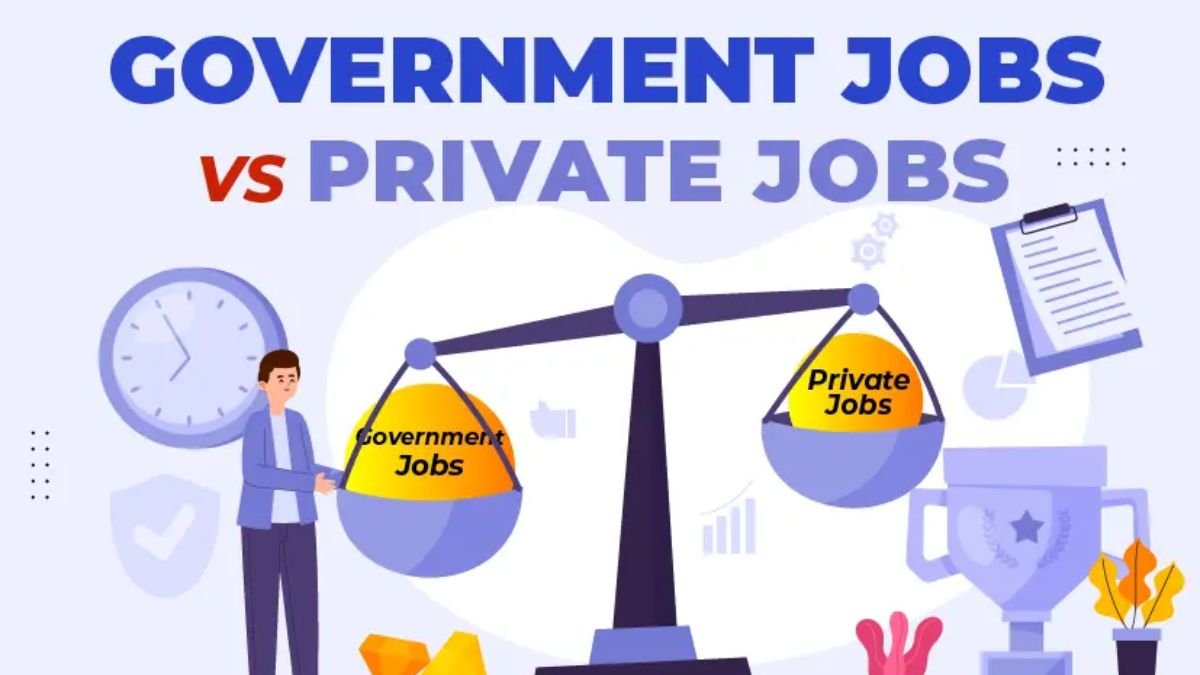
Choosing the right career path is a critical decision for students, graduates, and professionals. In India and globally, careers are generally divided into private sector jobs and government jobs. Each comes with its own advantages, challenges, and growth opportunities. This guide will help you understand the key differences and decide which path suits your personality, goals, and lifestyle.
Understanding Private Jobs
Private sector jobs are roles offered by privately-owned companies, including startups, MNCs, SMEs, and tech companies.
Key Features of Private Jobs:
- Competitive salaries, often higher than government pay for similar roles
- Performance-based incentives and bonuses
- Flexible work culture and modern office environments
- Faster career progression based on performance
- Opportunities for creativity, innovation, and entrepreneurship
Common Private Job Sectors:
- IT and Software
- Finance and Banking
- Marketing and Advertising
- E-commerce and Retail
- Consulting and Management
Understanding Government Jobs
Government jobs are positions in public sector organizations at the central, state, or local level. Examples include administrative services, banking, railways, defense, and public sector companies.
Key Features of Government Jobs:
- Job security and stability
- Fixed working hours and structured work environment
- Pension, healthcare, and other benefits
- Slower but steady career progression
- Opportunities for public service and societal impact
Popular Government Jobs in India:
- Civil Services (IAS, IPS, IFS)
- Banking (PO, Clerk)
- Railways
- Defense and Armed Forces
- Public Sector Undertakings (PSUs)
Key Differences Between Private and Government Jobs
| Feature | Private Jobs | Government Jobs |
|---|---|---|
| Salary | Higher for high performers, variable | Fixed, often lower initially |
| Job Security | Less secure, performance-based | Very secure and stable |
| Work Hours | Flexible, can be long | Fixed and structured |
| Career Growth | Faster, merit-based | Slower, seniority-based |
| Work Culture | Dynamic, innovative | Formal, rule-based |
| Benefits | Performance bonuses, perks | Pension, healthcare, allowances |
| Recruitment Process | Resume, interviews, skill tests | Competitive exams, interviews, strict selection |
Pros and Cons of Private Jobs
Pros:
- Higher earning potential for talented employees
- Opportunities for skill development and learning
- Faster promotions based on performance
- Exposure to diverse projects and global practices
Cons:
- Job insecurity during economic downturns
- High competition and stress levels
- Work-life balance can be challenging
Pros and Cons of Government Jobs
Pros:
- Job stability and security
- Fixed working hours and structured environment
- Pension and long-term benefits
- Opportunities to serve the public and contribute to society
Cons:
- Slower career progression
- Salary growth may be limited compared to private sector
- Bureaucratic work culture can limit innovation
How to Choose Between Private and Government Jobs
When deciding your career path, consider the following:
1. Career Goals
- If you value high income, fast growth, and innovation, private jobs may be suitable.
- If you value stability, benefits, and public service, government jobs are ideal.
2. Personality and Work Style
- Private jobs require adaptability, competitiveness, and performance orientation.
- Government jobs suit patience, discipline, and long-term planning.
3. Risk Appetite
- Private jobs involve risk and reward based on performance and company health.
- Government jobs offer low risk and high security.
4. Long-Term Benefits
- Consider pension, healthcare, and retirement benefits for government jobs.
- Private jobs may offer higher short-term financial gains but less long-term security.
Conclusion
Both private and government jobs have their unique advantages and challenges. The right choice depends on your priorities, skills, and career goals. If you thrive in a competitive and fast-paced environment, private jobs may offer rapid growth and high rewards. If job security, structured work, and long-term benefits are more important, government jobs are the better choice.
Ultimately, success depends on how you leverage your skills, adapt to your work environment, and plan your career.
FAQs
Q1. Which is better: private or government jobs?
There’s no one-size-fits-all answer. Private jobs are ideal for fast growth and high earnings, while government jobs offer stability and long-term benefits.
Q2. Are government jobs safer than private jobs?
Yes, government jobs generally offer higher job security and consistent benefits.
Q3. Can I switch from a private job to a government job?
Yes, many professionals prepare for government exams while working in the private sector.
Q4. Do private jobs pay more than government jobs?
In most cases, private jobs offer higher initial salaries and performance-based incentives.
Q5. What skills are important for private jobs?
Adaptability, communication, technical expertise, leadership, and performance orientation are crucial.