
Introduction
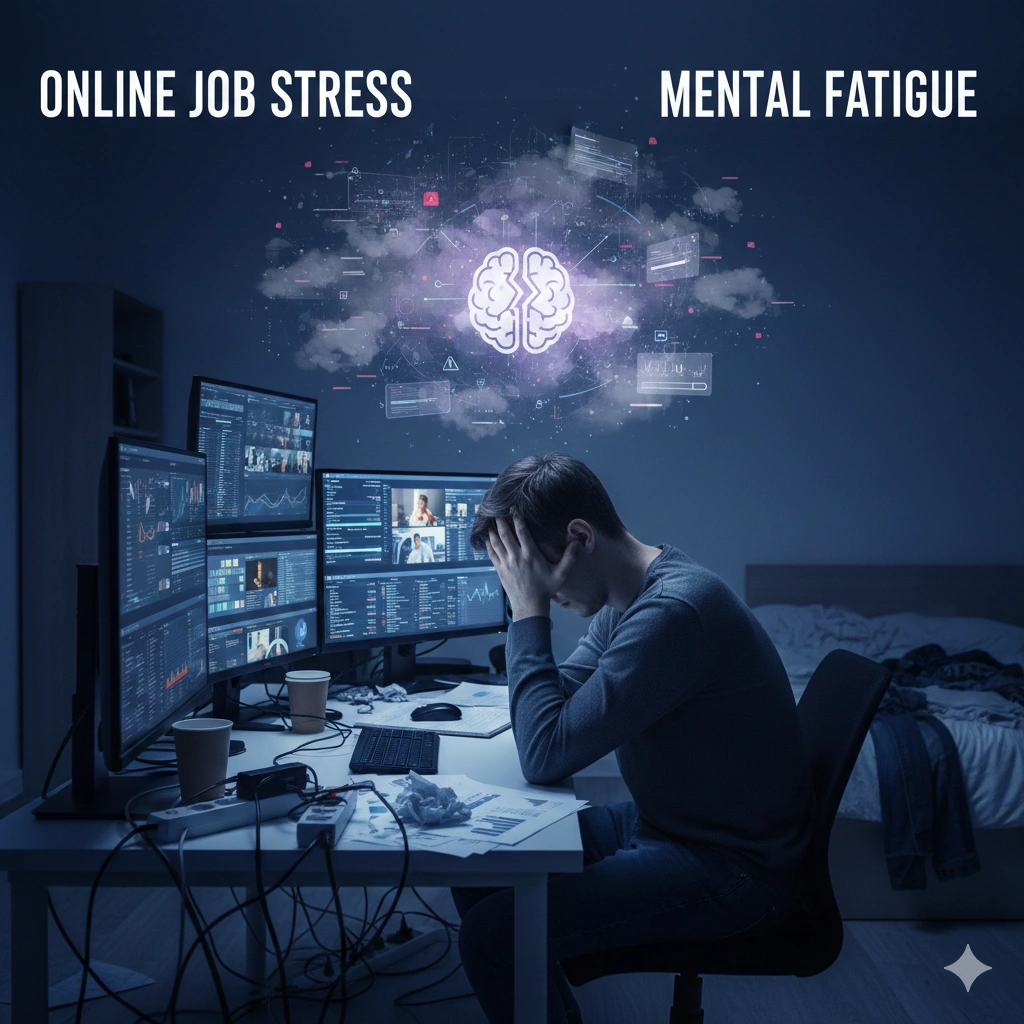
Online jobs have become an essential part of the modern workforce. From remote corporate roles and freelance projects to digital marketing, online teaching, customer support, and IT services, millions of people now earn their livelihoods through internet-based work. While online jobs promise flexibility, freedom, and location independence, they also bring a hidden cost—increasing stress and mental fatigue.
Unlike traditional office work, online jobs often blur the line between professional and personal life. Long screen hours, constant connectivity, performance pressure, and isolation quietly affect employees’ mental health. Over time, these factors lead to emotional exhaustion, reduced concentration, and burnout.
This article explores online job stress and mental fatigue, examining their causes, symptoms, daily challenges, long-term effects, and practical ways to manage them. Understanding these issues is crucial for building a sustainable and healthy online work lifestyle.
1. Understanding Online Job Stress
Online job stress refers to the mental and emotional pressure experienced by individuals who work primarily through digital platforms. This stress can stem from workload, deadlines, job insecurity, communication challenges, and performance expectations.
Unlike physical jobs, online work stress is often invisible. Employees may appear fine while struggling internally. The absence of physical supervision does not reduce pressure—in many cases, it increases it.
Online job stress builds gradually and can become chronic if not addressed.
2. What Is Mental Fatigue?
Mental fatigue is a state of cognitive exhaustion caused by prolonged mental effort. It affects attention, memory, decision-making, and emotional regulation.
In online jobs, mental fatigue is common due to continuous screen exposure, multitasking, and information overload. Employees may feel mentally drained even after sitting still all day.
Mental fatigue reduces productivity and increases errors, creating a cycle of stress and frustration.
3. Long Working Hours and Overwork
One major cause of online job stress is extended working hours. Without clear office timings, employees often work longer than intended.
Deadlines, global clients, and time zone differences push workers to stay online late at night or early in the morning. Breaks are skipped, and weekends become workdays.
Over time, constant overwork leads to exhaustion, irritability, and declining mental health.
4. Always-Connected Digital Culture
Online jobs create an environment of constant connectivity. Emails, chat messages, notifications, and task updates arrive nonstop.
Employees feel pressured to respond immediately to prove availability and commitment. Turning off notifications often triggers anxiety or guilt.
This constant digital engagement prevents the brain from resting, leading to mental fatigue and burnout.
5. Excessive Screen Time
Screen time is unavoidable in online jobs. Employees spend hours staring at computers, tablets, or mobile screens.
Prolonged screen exposure causes eye strain, headaches, sleep disturbances, and difficulty concentrating. Blue light affects sleep cycles, reducing rest quality.
Physical discomfort adds to mental stress, making it harder to stay focused and motivated.
6. Information Overload
Online workers constantly process large amounts of information—emails, reports, dashboards, messages, and updates.
This information overload overwhelms the brain. Switching between tasks reduces efficiency and increases cognitive strain.
Mental fatigue intensifies when the brain has no time to process or prioritize information properly.
7. Pressure to Be Self-Disciplined
Online jobs demand high levels of self-discipline. Without supervisors or structured environments, employees must manage their time independently.
This responsibility can be stressful, especially for those who struggle with motivation or focus. Procrastination leads to guilt, anxiety, and rushed work.
The pressure to self-manage constantly contributes to mental exhaustion.
8. Isolation and Lack of Social Interaction
Human interaction is essential for mental well-being. Online jobs significantly reduce social contact.
Employees miss casual conversations, shared experiences, and emotional support from colleagues. Virtual meetings rarely replace genuine human connection.
Isolation increases feelings of loneliness, anxiety, and depression, intensifying mental fatigue.
9. Communication Stress in Online Jobs
Digital communication lacks tone, body language, and emotional cues. Misunderstandings are common and stressful.
Writing messages carefully, attending video calls, and managing multiple platforms drain mental energy. Fear of miscommunication adds anxiety.
Clear communication becomes mentally exhausting over time.
10. Job Insecurity and Performance Pressure
Many online jobs involve contracts, freelancing, or performance-based evaluation. Job security often feels uncertain.
Employees worry about client satisfaction, ratings, renewals, or layoffs. This constant fear creates mental stress and overworking habits.
Performance pressure prevents relaxation, even during personal time.
11. Blurred Work-Life Boundaries
Online jobs blur the line between work and personal life. Home becomes the workplace, making it hard to disconnect mentally.
Employees may work from bedrooms or living rooms, associating these spaces with stress. Personal time feels interrupted by work thoughts.
This lack of separation increases mental fatigue and emotional strain.
12. Sleep Disruption and Fatigue
Stress and screen exposure disrupt sleep patterns. Many online workers struggle with insomnia or poor sleep quality.
Late-night work, notifications, and racing thoughts prevent deep rest. Lack of sleep worsens mental fatigue, focus, and mood.
Sleep deprivation creates a cycle of stress and reduced productivity.
13. Physical Inactivity and Its Mental Impact
Online jobs often involve long hours of sitting. Physical inactivity affects both physical and mental health.
Lack of movement reduces blood circulation and energy levels. Exercise plays a crucial role in stress relief and mental clarity.
Sedentary lifestyles increase anxiety, depression, and mental fatigue.
14. Multitasking and Cognitive Overload
Online workers frequently multitask—attending meetings, responding to messages, and completing tasks simultaneously.
Multitasking overloads the brain and reduces efficiency. It increases mistakes and mental exhaustion.
The brain performs best when focused on one task at a time.
15. Lack of Recognition and Feedback
In online jobs, employees may receive limited feedback or appreciation. Silence is often interpreted negatively.
Lack of recognition reduces motivation and increases self-doubt. Employees may overwork to seek validation.
Emotional stress increases when efforts go unnoticed.
16. Emotional Burnout
Prolonged stress and mental fatigue can lead to burnout—a state of emotional, mental, and physical exhaustion.
Burnout symptoms include cynicism, detachment, low motivation, and reduced performance. Recovery takes time and effort.
Burnout is a serious risk in online jobs if stress remains unmanaged.
17. Impact on Personal Relationships
Online job stress often spills into personal life. Irritability, fatigue, and distraction affect relationships.
Employees may struggle to be present with family or friends. Emotional distance and conflict may arise.
Work stress becomes a constant background presence.
18. Signs of Online Job Stress and Mental Fatigue
Common signs include:
- Constant tiredness
- Difficulty concentrating
- Irritability and mood swings
- Headaches and eye strain
- Sleep problems
- Loss of motivation
- Anxiety and sadness
Recognizing these signs early is crucial for prevention.
19. Strategies to Manage Online Job Stress
Effective strategies include:
- Setting clear work hours
- Taking regular breaks
- Limiting notifications
- Creating a dedicated workspace
- Practicing mindfulness
- Exercising regularly
- Prioritizing tasks
Small changes can significantly reduce stress.
20. Employer’s Role in Reducing Stress
Employers must recognize online job stress and support mental well-being. Flexible schedules, realistic workloads, and mental health resources are essential.
Open communication, recognition, and clear expectations reduce pressure.
Healthy employees are more productive and engaged.
Conclusion
Online jobs offer flexibility and opportunity, but they also come with significant mental challenges. Online job stress and mental fatigue are real issues affecting millions of workers worldwide.
By understanding the causes and recognizing early signs, employees can take steps to protect their mental health. Employers must also play an active role in creating supportive and balanced online work environments.
Sustainable online work is possible—but only when mental well-being is prioritized alongside productivity.


