
Introduction
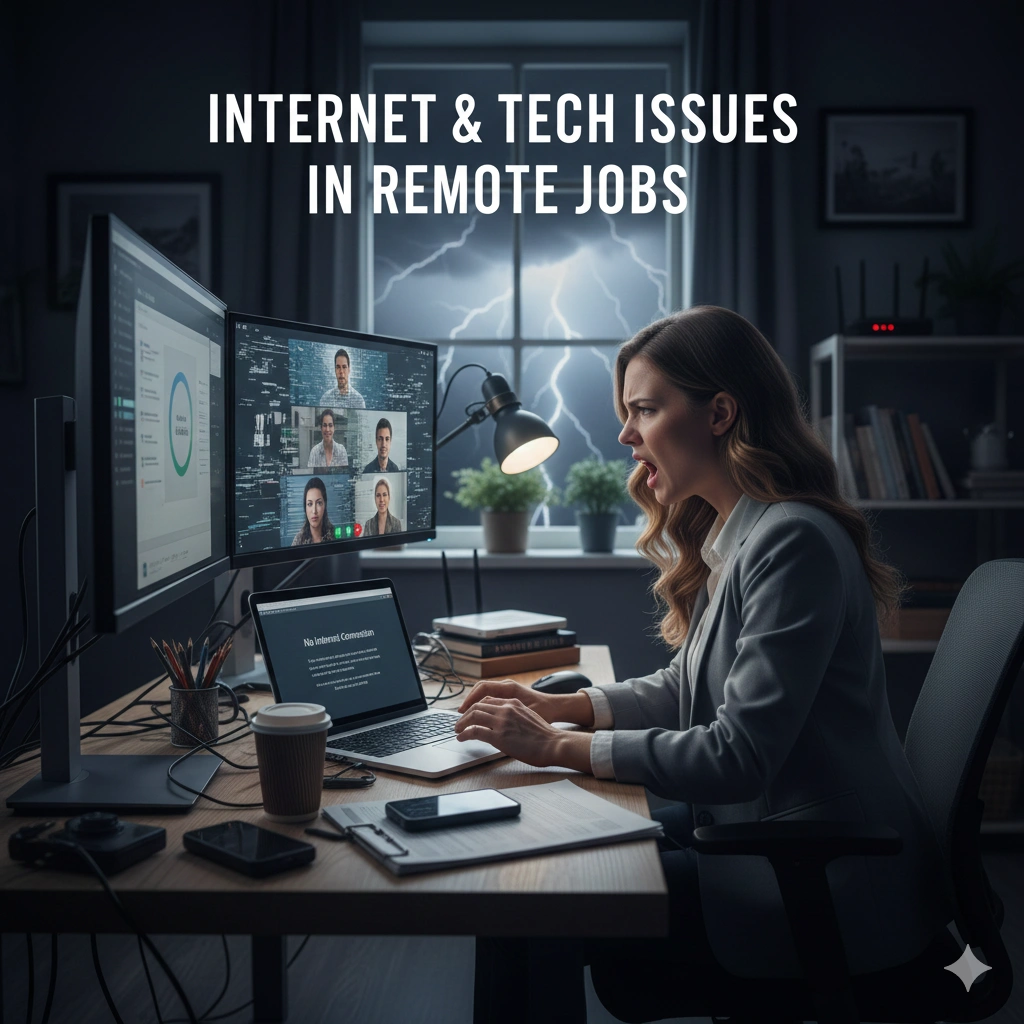
Remote jobs have reshaped the modern workplace, offering flexibility, comfort, and global opportunities. However, behind the promise of work from anywhere lies a persistent challenge that affects nearly every remote worker at some point: internet and technology issues.
From unstable internet connections and software failures to hardware breakdowns and cybersecurity threats, technical problems can disrupt productivity, increase stress, and even threaten job security. Unlike traditional offices with dedicated IT teams and infrastructure, remote workers often face these challenges alone.
This article explores the real internet and tech issues in remote jobs, their impact on productivity and mental health, and practical solutions for employees and employers to create smoother remote work experiences.
The Role of Technology in Remote Work
Technology is the backbone of remote jobs. Internet connectivity, communication tools, cloud platforms, and digital devices enable remote collaboration. Without reliable technology, remote work becomes frustrating and inefficient.
Remote workers depend on:
- High-speed internet
- Computers and mobile devices
- Video conferencing tools
- Cloud-based software
- Cybersecurity systems
Any disruption can halt work instantly.
Common Internet Issues in Remote Jobs
1. Unstable Internet Connection
One of the most frequent problems remote workers face is unreliable internet. Frequent disconnections, slow speeds, and latency issues disrupt meetings and delay tasks.
2. Low Bandwidth and Speed Limitations
Video calls, file uploads, and cloud tools require high bandwidth. Shared household connections or outdated plans often struggle to meet work demands.
3. Power Outages and Network Downtime
In many regions, power cuts and ISP outages remain common. Remote workers lose access to work platforms, creating delays and stress.
4. Location-Based Connectivity Challenges
Rural or semi-urban areas often lack reliable internet infrastructure, limiting remote work opportunities and performance.
Technology Issues Beyond Internet Problems
1. Hardware Failures
Laptops overheating, battery issues, broken keyboards, or malfunctioning webcams can interrupt work unexpectedly.
2. Software Glitches and Updates
Unexpected updates, bugs, and compatibility issues slow down workflows and create confusion during meetings or deadlines.
3. Device Compatibility Issues
Different operating systems and devices may not support required software, leading to access and performance problems.
4. Data Loss and System Crashes
Without proper backups, system crashes can result in loss of important files and work progress.
Communication Tool Challenges
Remote jobs rely heavily on communication platforms. Common issues include:
- Audio and video lag during meetings
- App crashes during important calls
- Notification overload
- Confusing multiple communication channels
These problems reduce efficiency and increase frustration.
Cybersecurity and Privacy Concerns
1. Security Threats
Remote workers face increased risks of phishing attacks, malware, and data breaches, especially on unsecured networks.
2. Lack of VPN Access
Without proper VPNs, sensitive company data may be exposed, creating security risks.
3. Shared Networks and Devices
Using shared Wi-Fi or personal devices increases vulnerability to cyber threats.
Impact of Internet & Tech Issues on Productivity
Technical problems directly affect work output:
- Missed meetings and deadlines
- Reduced collaboration
- Increased error rates
- Lower efficiency
Employees often spend more time fixing issues than doing actual work.
Mental Health Impact of Tech Problems
Repeated technical issues create stress, anxiety, and frustration. Employees may feel helpless, embarrassed during meetings, or worried about being perceived as unreliable.
Over time, this contributes to burnout and job dissatisfaction.
Effect on Professional Image and Career Growth
Frequent disruptions can harm an employee’s professional reputation. Missed deadlines and poor communication may affect performance reviews and growth opportunities.
Internet & Tech Issues for Different Remote Roles
1. Corporate Remote Employees
Daily video meetings and cloud tools make them heavily dependent on stable technology.
2. Freelancers and Gig Workers
Client deadlines and platform-based work increase pressure when technical issues arise.
3. Online Educators
Live classes and student engagement rely on seamless connectivity and reliable devices.
4. Customer Support Roles
Poor internet affects call quality and response time, directly impacting service quality.
How Employees Can Manage Internet & Tech Issues
1. Invest in Reliable Internet
Choose a high-speed plan and keep backup options like mobile hotspots.
2. Maintain Backup Devices
Keep spare accessories like chargers, headphones, or keyboards.
3. Regular System Maintenance
Update software, run security checks, and clean devices regularly.
4. Use Cloud Backups
Store work files in cloud platforms to prevent data loss.
5. Learn Basic Tech Troubleshooting
Understanding basic fixes saves time and reduces stress.
How Employers Can Support Remote Workers
1. Provide Equipment Allowances
Support employees with laptops, routers, and accessories.
2. Offer IT Support Access
Remote IT help desks and clear escalation processes reduce downtime.
3. Allow Flexibility During Tech Issues
Understanding technical challenges builds trust and morale.
4. Strengthen Cybersecurity Policies
Provide VPNs, training, and secure tools for remote work.
The Role of Policy and Infrastructure
Governments and organizations must invest in digital infrastructure to support remote work growth. Reliable internet access is essential for future employment models.
Future of Remote Work Technology
Advancements in cloud computing, 5G, and AI-driven support tools promise improved remote work experiences. However, digital preparedness remains critical.
Conclusion
Internet and tech issues in remote jobs are unavoidable but manageable. While technology enables remote work, its failures can disrupt productivity, increase stress, and impact career growth.
By investing in reliable tools, proactive planning, and supportive policies, both employees and employers can reduce technical challenges and create resilient remote work environments.
Remote work success depends not only on skills and dedication but also on strong digital infrastructure and support systems.