
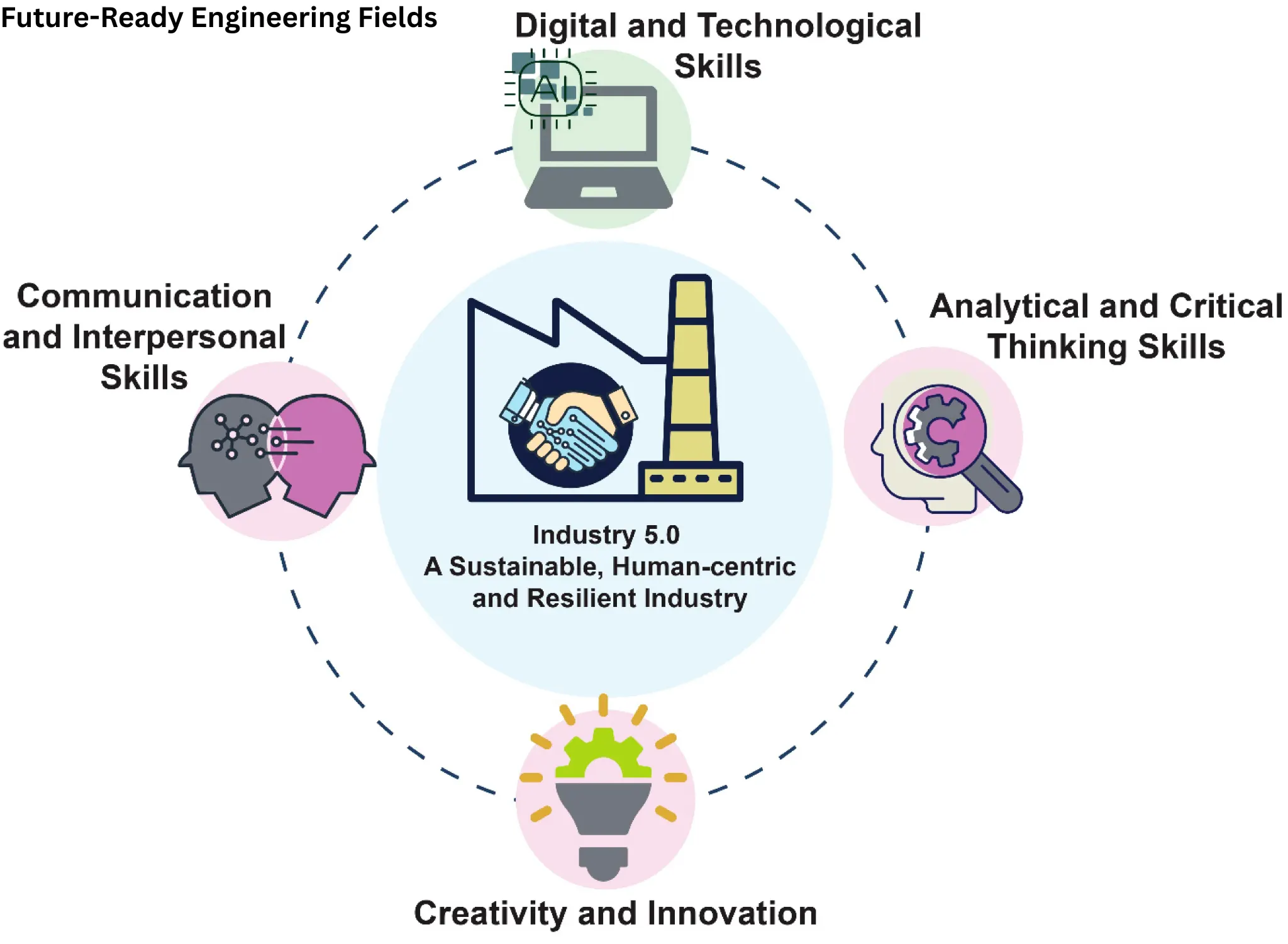
Engineering has always been the backbone of innovation, but in today’s rapidly evolving world, the demand for future-ready engineering fields has reached an all-time high. From artificial intelligence to renewable energy, biotech to space engineering, new-age technologies are reshaping industries and creating opportunities that didn’t exist a decade ago.
If you are a student planning your engineering journey—or a professional considering a career switch—understanding which branches will dominate the future is essential. This guide explores the most promising, high-growth, and future-ready engineering fields you should consider now, why they matter, and what skills you’ll need to thrive.
1. Why Future-Ready Engineering Matters Today
The world is transitioning into a new era driven by digital transformation, sustainability, and automation. Some of the strongest reasons why future-focused engineering fields are critical include:
✔ Industry 4.0 Transformation
Automation, cloud computing, and IoT have integrated into all major industries, making traditional engineering approaches outdated.
✔ Massive Global Skill Shortage
Reports indicate a global shortage of engineers in areas like AI, cybersecurity, and renewable energy—fields expected to grow exponentially over the next decade.
✔ Rise of Sustainable Technologies
Climate change and global energy crises are driving innovation in green tech, environmental engineering, and electric vehicles.
✔ High-Paying and Stable Careers
Future-ready fields often offer significantly higher salary packages and global career mobility.
✔ Scope for Innovation
These emerging fields prioritize creativity, critical thinking, and problem-solving—perfect for ambitious minds
2. Top Future-Ready Engineering Fields to Choose Today
Let’s explore the engineering specializations that will shape the next decade.
1. Artificial Intelligence & Machine Learning Engineering
AI and ML are revolutionizing industries from healthcare to finance to transportation. Whether it’s autonomous vehicles, smart assistants, or predictive analytics, AI is the engine behind modern innovation.
Why It’s Future-Ready
- Powers self-driving cars, robotics, automation
- Used in medicine, finance, cybersecurity, e-commerce
- High demand globally, with leading salary packages
Key Skills
- Python, R
- Deep learning
- Neural networks
- Data science
- Algorithms
Career Paths
- AI Engineer
- Machine Learning Scientist
- Data Analyst
- Robotics Engineer
- Automation Specialist
2. Robotics & Mechatronics Engineering
Robots are no longer just for factories—they’re in homes, hospitals, and research labs. Mechatronics blends mechanical, electronics, and programming skills.
Why It’s Future-Ready
- Growth of industrial automation
- Demand for humanoid robots and assistive robots
- Key component of Manufacturing 4.0
Key Skills
- Microcontrollers
- PLC programming
- Sensors and actuators
- Embedded systems
Careers
- Robotics Engineer
- Automation Specialist
- Industrial Designer
3. Cybersecurity Engineering
With digital threats rising, cybersecurity professionals are one of the most in-demand engineers.
Why It’s Future-Ready
- Every company needs cybersecurity
- Increasing data breaches and cyberattacks
- Governments investing heavily in cyber defense
Key Skills
- Ethical hacking
- Network security
- Cryptography
- Threat analysis
Careers
- Cybersecurity Engineer
- Security Analyst
- Penetration Tester
- Cyber Forensic Specialist
4. Renewable & Sustainable Energy Engineering
With the world shifting toward clean energy, renewable engineering is the future of power generation.
Why It’s Future-Ready
- Global focus on reducing carbon emissions
- EV (Electric Vehicle) demand rising dramatically
- Solar, wind, and hydrogen technologies booming
Key Skills
- Solar and wind systems
- Sustainable energy design
- Battery technology
- Energy auditing
Careers
- Renewable Energy Engineer
- Solar Power Consultant
- EV Battery Engineer
5. Biotechnology & Genetic Engineering
Biotech is transforming healthcare, agriculture, pharmaceuticals, and food engineering.
Why It’s Future-Ready
- Rise of gene editing (CRISPR)
- Demand for personalized medicine
- Global focus on biofuels and bio-based materials
Key Skills
- Molecular biology
- Genetic sequencing
- Bioprocess engineering
Careers
- Genetic Engineer
- Biomedical Researcher
- Clinical Lab Scientist
6. Aerospace & Space Engineering
With private companies like SpaceX, Blue Origin, and ISRO expanding operations, aerospace engineering is thriving.
Why It’s Future-Ready
- Space exploration missions expanding
- Growth in satellite tech, drones, and UAVs
- Need for space tourism engineers
Key Skills
- Aerodynamics
- Propulsion
- Materials engineering
Careers
- Aerospace Engineer
- Satellite Systems Engineer
- Aeronautical Researcher
7. Data Science & Big Data Engineering
Data is the new oil—and data engineers are the ones refining it.
Why It’s Future-Ready
- Companies depend on big data for decisions
- High salaries due to skill shortages
- Used in all industries
Key Skills
- Data visualization
- SQL
- Cloud computing
- Statistics
Careers
- Data Scientist
- Data Engineer
- Business Intelligence Analyst
8. Environmental & Climate Engineering
Climate engineering tackles global challenges such as pollution, water scarcity, and sustainable development.
Why It’s Future-Ready
- Governments enforcing stricter environmental laws
- Green building and waste management booming
Key Skills
- Water management
- Waste reduction
- Environmental impact assessment
Careers
- Environmental Consultant
- Climate Change Analyst
9. Nanotechnology Engineering
Nanotech is essential for medical implants, electronics, and advanced materials.
Why It’s Future-Ready
- Used in cancer treatment, sensors, EV batteries
- Growing demand for nanomaterials
Key Skills
- Nano fabrication
- Chemical engineering basics
- Materials science
Careers
- Nanotechnology Engineer
- Materials Scientist
10. Quantum Engineering
Quantum computing is one of the fastest-growing futuristic fields.
Why It’s Future-Ready
- Used in cybersecurity, simulation, AI
- Major investments from Google, IBM, and governments
Key Skills
- Quantum mechanics
- Linear algebra
- Quantum algorithms
Careers
- Quantum Research Scientist
- Quantum Software Engineer
3. How to Choose the Right Future-Ready Engineering Field
Choosing a future-proof engineering field depends on your strengths, interests, and career goals. Consider the following:
✔ Your passion and strengths
Love coding? Go for AI or cybersecurity.
Interested in sustainability? Choose renewable energy.
Creative thinker? Robotics or aerospace may fit.
✔ Future salary trends
AI, data science, quantum tech, and cybersecurity top global salary charts.
✔ Industry demand
Choose fields with long-term growth potential and global mobility.
✔ Skill compatibility
Pick a field that aligns with your learning capability—core math, coding, or design skills.
4. Skills Needed to Succeed in Future-Ready Engineering Fields
To stay competitive, future engineers should master:
- Critical thinking
- Problem-solving
- Programming basics
- Cloud and software tools
- Communication & teamwork
- Project management
- Research and innovation mindset
These skills are universal across all emerging engineering fields.
5. The Future of Engineering Jobs Worldwide
According to global job forecasts:
- AI & robotics jobs will grow by 40% in the next decade.
- Renewable energy engineers will see 10+ million new jobs globally.
- Cybersecurity will see a 3.5 million talent shortage by 2030.
- Data science roles will grow by 36%, one of the fastest rates worldwide.
Future-ready engineering is not just a career option—it’s the gateway to global opportunities.
Conclusion
Engineering is evolving faster than ever, and choosing a future-ready field today ensures career security, high salary potential, and global demand. Whether you’re leaning toward AI, biotech, aerospace, environmental tech, or robotics, the opportunities ahead are limitless.
If you want a career that is innovative, impactful, and future-proof, now is the time to choose the right engineering specialization and build your skills today.