
Introduction
The rise of online jobs has transformed the way people work, communicate, and build careers. From remote corporate roles to freelancing, virtual assistance, online teaching, and digital marketing, online jobs offer flexibility and global opportunities. However, this digital shift has also introduced a serious and growing problem: digital burnout.
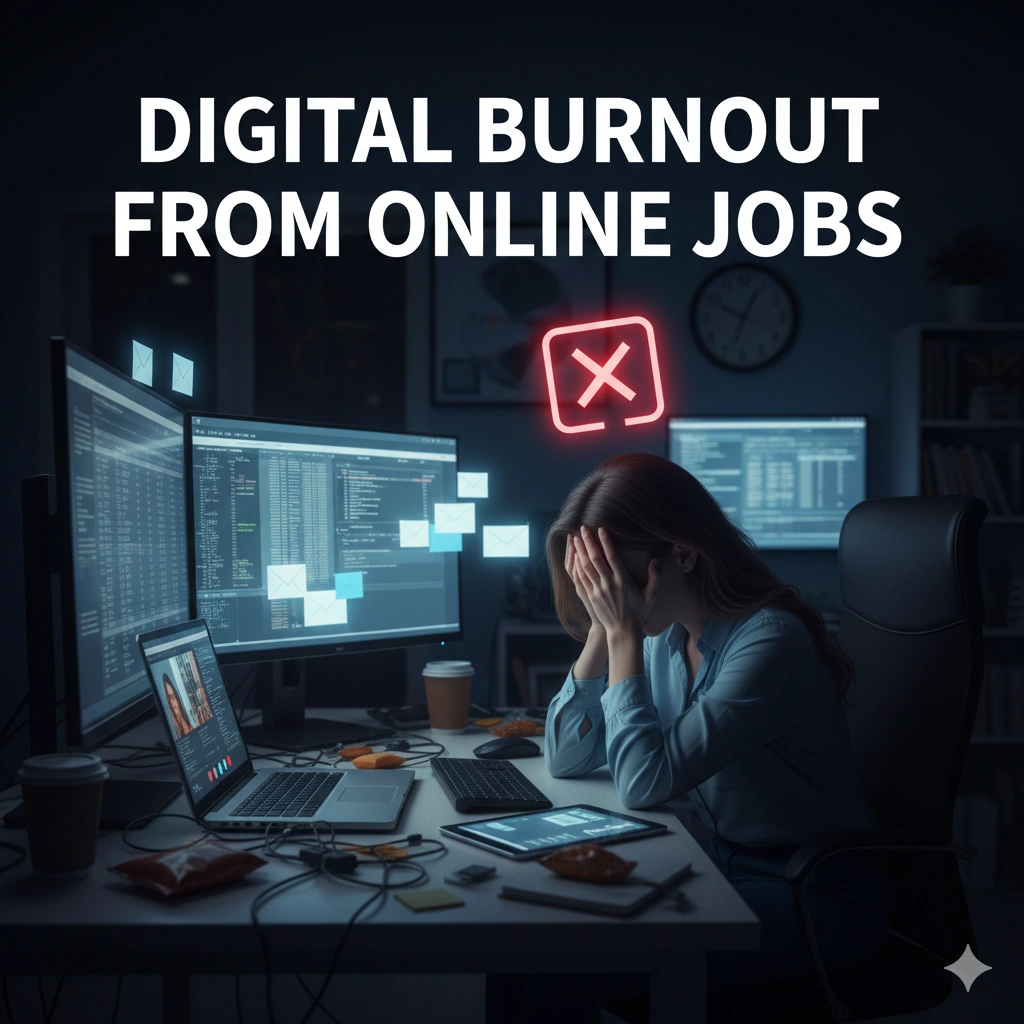
Digital burnout from online jobs is a state of mental, emotional, and physical exhaustion caused by excessive screen time, constant connectivity, information overload, and pressure to remain productive in digital environments. Unlike traditional burnout, digital burnout is deeply tied to technology use, making it harder to escape.
This article explores the real causes, symptoms, impacts, and solutions related to digital burnout from online jobs, helping employees and organizations understand why it happens and how it can be prevented.
Understanding Digital Burnout
Digital burnout occurs when individuals experience prolonged stress and fatigue due to continuous interaction with digital tools such as computers, smartphones, emails, video calls, and online platforms.
In online jobs, work rarely has a clear beginning or end. Notifications, deadlines, and messages follow employees everywhere, making recovery time limited.
Why Digital Burnout Is Common in Online Jobs
1. Excessive Screen Time
Online jobs require hours of screen exposure daily. Staring at screens for long periods strains the eyes, disrupts sleep patterns, and exhausts the brain.
2. Always-Connected Work Culture
Emails, messaging apps, and collaboration tools create an expectation of constant availability. Employees feel pressured to respond instantly, even outside working hours.
3. Lack of Physical Boundaries
When work devices are also personal devices, the line between work and rest disappears. The brain struggles to disconnect from work mode.
4. Information Overload
Online workers process large amounts of information daily—emails, tasks, notifications, and updates. This cognitive overload leads to mental fatigue.
5. Performance Pressure
Online jobs often emphasize metrics, deadlines, and visibility. Employees push themselves to meet expectations, increasing stress and burnout risk
Common Symptoms of Digital Burnout
Digital burnout develops gradually and often goes unnoticed until it becomes severe.
Mental and Emotional Symptoms
- Constant fatigue
- Lack of motivation
- Irritability and frustration
- Anxiety and stress
- Difficulty concentrating
Physical Symptoms
- Eye strain and headaches
- Sleep disturbances
- Neck, shoulder, and back pain
- General exhaustion
Behavioral Symptoms
- Procrastination
- Reduced productivity
- Withdrawal from social interactions
- Increased screen dependence
Impact on Mental Health
1. Chronic Stress
Digital burnout keeps the body in a state of continuous stress. Over time, this increases cortisol levels and weakens emotional resilience.
2. Anxiety and Depression
Constant digital engagement can lead to feelings of overwhelm, helplessness, and emotional numbness.
3. Cognitive Fatigue
Decision-making, problem-solving, and creativity decline when the brain does not receive adequate rest.
Physical Health Effects of Digital Burnout
Online job burnout is not limited to mental health:
- Poor posture causes musculoskeletal issues
- Reduced physical movement leads to weight changes
- Blue light exposure affects sleep cycles
- Sedentary lifestyle increases long-term health risks
Digital Burnout vs Traditional Burnout
| Traditional Burnout | Digital Burnout |
|---|---|
| Workload-based | Technology-driven |
| Physical office stress | Screen and connectivity stress |
| Clear work hours | Blurred work-life boundaries |
| Easier disconnection | Constant digital access |
Digital burnout is harder to escape because technology follows employees everywhere.
How Digital Burnout Affects Productivity
Ironically, digital burnout reduces productivity:
- Tasks take longer
- Mistakes increase
- Creativity declines
- Engagement drops
Employees may stay online longer but achieve less
Impact on Work-Life Balance
Digital burnout blurs personal time. Employees check work messages during meals, family time, and rest hours. Over time, personal relationships suffer.
Digital Burnout in Different Online Jobs
1. Remote Corporate Employees
Daily meetings, emails, and reporting create digital overload.
2. Freelancers and Gig Workers
Freelancers manage multiple clients and platforms, increasing screen time and pressure.
3. Online Teachers and Trainers
Virtual classes require constant focus, engagement, and screen presence, leading to exhaustion.
4. Content Creators and Digital Marketers
Content planning, analytics, and social media monitoring create continuous digital engagement.
Long-Term Consequences of Ignoring Digital Burnout
If left unaddressed, digital burnout can lead to:
- Severe mental health issues
- Career dissatisfaction
- Chronic fatigue
- High turnover rates
- Decreased quality of life
How Employees Can Prevent Digital Burnout
1. Set Screen-Time Limits
Schedule breaks away from screens to rest eyes and mind.
2. Create Digital Boundaries
Turn off notifications after work hours and avoid unnecessary multitasking.
3. Follow the 20-20-20 Rule
Every 20 minutes, look at something 20 feet away for 20 seconds.
4. Maintain Physical Activity
Regular movement improves energy and mental clarity.
5. Prioritize Sleep
Avoid screens before bedtime to improve sleep quality.
How Employers Can Help Reduce Digital Burnout
1. Encourage Healthy Work Hours
Avoid promoting long working hours and after-hours communication.
2. Reduce Unnecessary Meetings
Limit video calls and promote asynchronous communication.
3. Focus on Results, Not Screen Time
Evaluate performance based on outcomes rather than online presence.
4. Promote Mental Health Awareness
Provide resources and support for employee well-being.
The Role of Technology in Solving Digital Burnout
Technology can also help manage burnout:
- Productivity tools that encourage breaks
- Blue light filters
- Focus and time management apps
- Wellness programs
Balanced use of technology is key.
The Future of Online Work and Burnout Prevention
As online jobs continue to grow, burnout prevention must become a priority. Sustainable online work models focus on balance, flexibility, and well-being rather than constant connectivity.
Conclusion
Digital burnout from online jobs is a serious challenge of the modern workforce. While technology enables flexibility and opportunity, excessive digital exposure can harm mental and physical health.
Recognizing the signs early and taking proactive steps can help employees maintain balance and productivity. Employers also play a crucial role in creating healthier digital work environments.
Online jobs should empower individuals—not exhaust them. With awareness, boundaries, and support, digital burnout can be prevented, allowing professionals to thrive in the digital age.