Introduction
In today’s rapidly evolving digital world, businesses cannot rely on traditional, linear approaches to innovation. Complex challenges require a rare blend of engineering expertise, creative problem-solving, and strategic thinking. This is exactly where the role of a Creative Solutions Engineer becomes invaluable. Acting as a hybrid professional—part engineer, part innovator, and part visionary—a Creative Solutions Engineer designs, builds, optimizes, and implements solutions that push boundaries and set new standards for efficiency, agility, and growth.
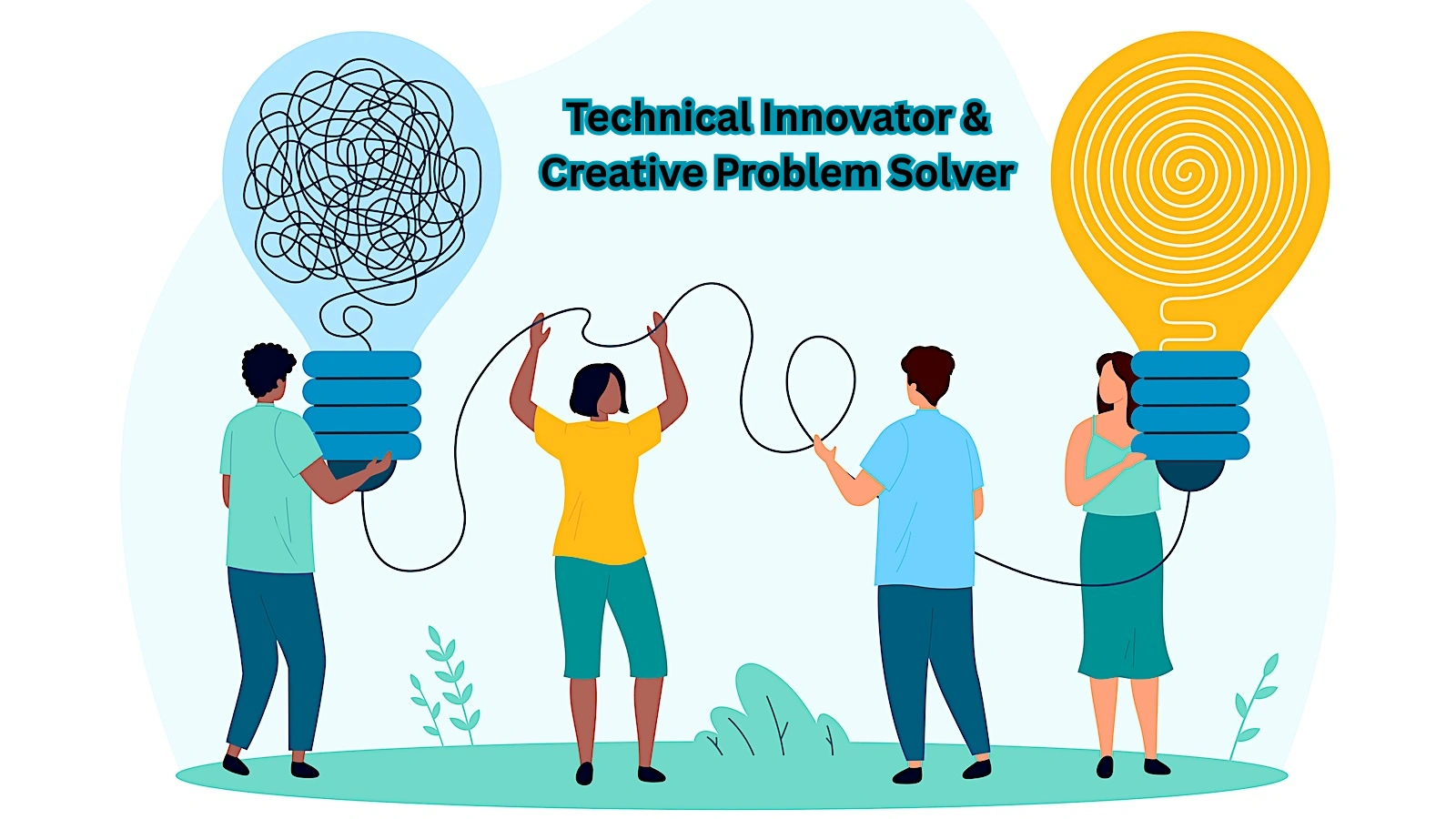
A Technical Innovator & Creative Problem Solver brings together advanced technical knowledge, curiosity, and imaginative thinking to transform challenges into opportunities. From improving digital workflows to designing automated systems, from conceptualizing breakthrough products to optimizing user experiences, this role influences every part of an organization’s journey toward future-readiness.
This article explores the role, responsibilities, skills, impact, workflow, and career path of a Creative Solutions Engineer. Whether you are an aspiring engineer, a business leader seeking innovation, or a professional looking to redefine your career, this deep dive will give you everything you need to understand and embrace the power of creative engineering.
1. What Is a Creative Solutions Engineer?
A Creative Solutions Engineer is a professional who blends technical engineering capabilities with innovative thinking to design impactful solutions to real-world problems. Unlike traditional engineers who follow predefined frameworks, a Creative Solutions Engineer looks beyond the conventional and explores new approaches to accelerate performance, reduce costs, and enhance user experiences.
This role sits at the intersection of:
- Engineering
- Creativity
- Technology
- Innovation Strategy
- Problem Diagnosis
- Automation
- Cross-functional Development
These engineers are known for their ability to take an idea from conceptualization to execution. They understand systems deeply, identify bottlenecks, and develop tailored solutions that align with business goals.
2. Why Creative Engineering Matters in the Modern World
Today’s businesses are dealing with unprecedented technological disruption—AI, automation, IoT, robotics, cloud computing, cybersecurity threats, and digital transformation. With evolving consumer expectations and increasing competition, organizations need engineers who think beyond technical execution.
The value of creative engineering lies in its ability to:
✔ Drive Innovation
Creative Solutions Engineers propose new ways of doing things—faster, smarter, more efficiently.
✔ Improve System Efficiency
They streamline workflows, reduce redundancy, automate repetitive tasks, and optimize processes.
✔ Reduce Operational Costs
By identifying problems early and designing optimized solutions, they save organizations significant resources.
✔ Enhance User Experience
With a strong understanding of user behavior and technical constraints, they build intuitive and user-focused solutions.
✔ Accelerate Digital Transformation
They bridge the gap between traditional engineering and next-gen technologies like AI, ML, and cloud automation.
3. Key Responsibilities of a Creative Solutions Engineer
A Creative Solutions Engineer performs a wide variety of duties, including:
1. Diagnosing Problems
They analyze existing systems, identify inefficiencies, and evaluate technical limitations.
2. Designing Innovative Solutions
From software tools to workflow optimizations to automation systems, they conceptualize and implement ideas that solve core challenges.
3. Cross-Team Collaboration
They work closely with product managers, developers, designers, analysts, and leadership teams.
4. Research & Development
They stay updated with emerging technologies and apply new methods to build better systems.
5. Prototyping and Testing
Before full-scale deployment, they build prototypes, test performance, refine solutions, and validate feasibility.
6. Technical Consulting
They advise businesses on the best technologies, architectures, and strategies for achieving their goals.
7. Continuous Improvement
They monitor deployed systems and proactively enhance them to maintain efficiency and security.
4. Skills Required to Succeed as a Technical Innovator & Creative Problem Solver
1. Analytical Mindset
Solving complex problems requires strong analytical and critical-thinking abilities.
2. Technical Proficiency
Depending on the industry, this may include:
- Software Engineering
- Automation and Robotics
- Data Analysis
- Cloud Platforms
- Cybersecurity
- Mechanical or Electrical Engineering
- System Architecture
3. Creativity & Design Thinking
Innovators must think beyond traditional structures and discover new possibilities.
4. Communication Skills
They explain complex technical ideas in simple, clear language to non-technical teams.
5. Project Management
From planning to execution, they manage timelines and deliver solutions effectively.
6. Adaptability
Technology evolves rapidly, and Creative Solutions Engineers must evolve with it.
5. Real-World Applications of Creative Engineering
✔ Automation & AI Integration
Designing automated workflows for customer service, manufacturing, logistics, and data processing.
✔ Product Innovation
Creating new features, improving product performance, or developing entirely new solutions.
✔ System Optimization
Improving performance of existing digital platforms—reducing load times, improving scalability, or enhancing security.
✔ User Experience Enhancements
Building more intuitive interfaces, upgrading user journeys, or improving accessibility.
✔ Data-Driven Solutions
Using analytics and insights to build smarter decision-making systems.
✔ Digital Transformation
Shifting companies from manual processes to fully automated, cloud-driven ecosystems.
6. How Creative Solutions Engineers Solve Problems
Successful engineers follow a strategic process:
Step 1: Understand the Problem
They collect data, interview stakeholders, and map system workflows.
Step 2: Identify Root Causes
Instead of treating symptoms, they dig deep into the core issues.
Step 3: Brainstorm Creative Approaches
Using creativity, engineering principles, and innovation frameworks, they explore multiple solutions.
Step 4: Build a Prototype
A small, testable version of the solution is created for validation.
Step 5: Test & Improve
Feedback and real-time performance data help refine the design.
Step 6: Implement at Scale
A fully optimized solution is deployed across the system or organization.
Step 7: Monitor & Optimize
Long-term success requires continuous monitoring and refinement.
7. Importance of Innovation in Engineering Careers
The engineering industry is no longer about technical skills alone. The future belongs to professionals who combine creativity with technical mastery. Companies actively seek engineers who can think differently, innovate rapidly, and offer solutions that give them a competitive edge.
Creative engineers enjoy:
✔ Higher demand
Innovation skills are rare and highly valued.
✔ Better career growth
Strategic roles like Solutions Architect, Innovation Manager, Product Engineer, or R&D Specialist often evolve from this role.
✔ Stronger job security
Businesses always need problem-solvers—especially during change.
✔ Leadership opportunities
Innovators naturally lead teams, projects, and transformation initiatives.
8. Career Path & Future Scope
With continuous technological advancement, the need for Creative Solutions Engineers will only increase. Common career paths include:
- Solutions Architect
- Innovation Strategist
- Product Development Lead
- AI/Automation Specialist
- System Optimization Engineer
- Technical Consultant
- R&D Engineer
Future technologies such as AI copilots, robotics, quantum computing, advanced automation, and digital ecosystems will make this role even more essential.
Conclusion
The role of a Creative Solutions Engineer | Technical Innovator & Creative Problem Solver is more than just a job title—it is a powerful identity in today’s innovation-driven world. These professionals bridge the gap between engineering and creativity, between strategy and execution, and between problems and impactful solutions. With the right blend of imagination and technical expertise, they shape the future of businesses and technologies.
If you aspire to be a game-changer, a forward-thinker, and a builder of smarter systems, this is one of the most rewarding and high-impact career paths you can choose. As industries evolve and challenges become more complex, Creative Solutions Engineers will continue to lead the transformation and redefine what is possible.