Introduction
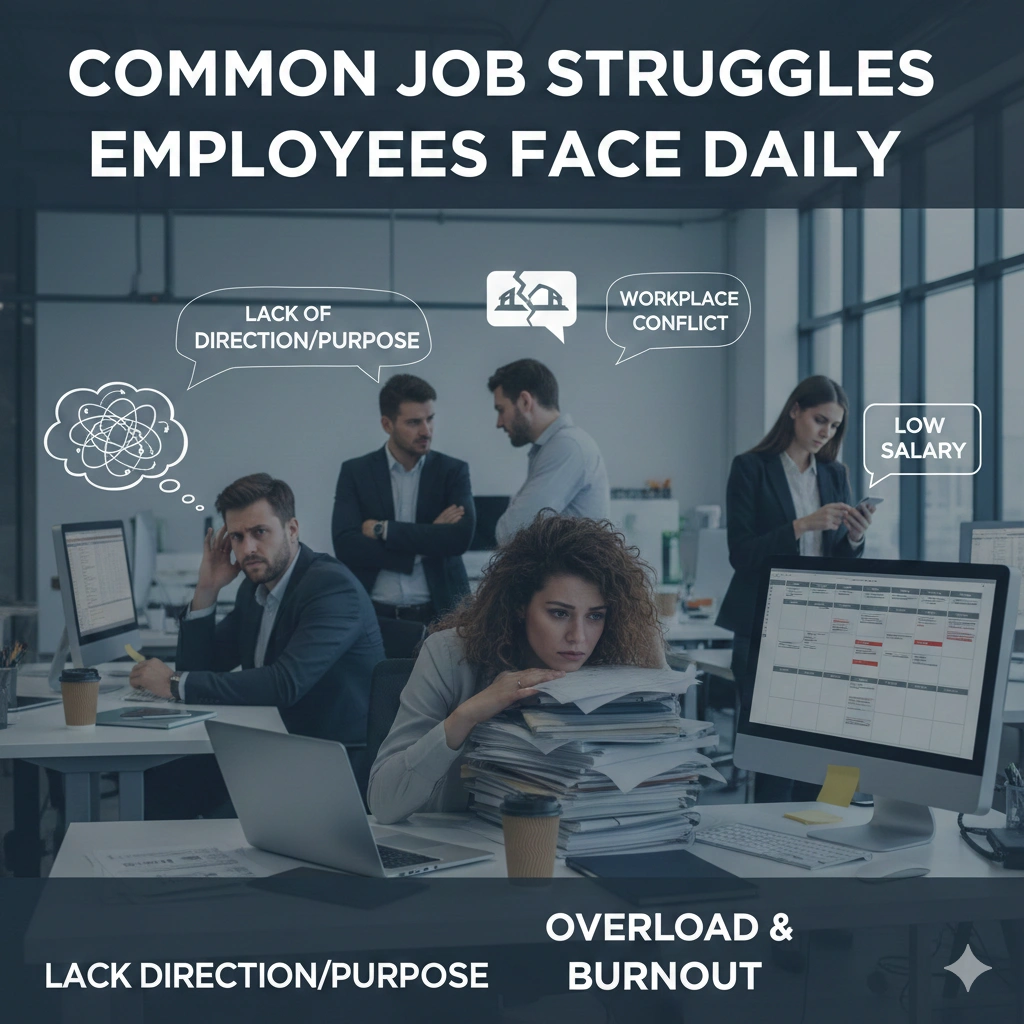
For millions of employees around the world, work is no longer just a place to earn a living—it has become a daily struggle. While jobs are meant to provide stability, growth, and purpose, many employees experience constant stress, dissatisfaction, and pressure instead. These struggles often go unnoticed because they are considered “normal” parts of working life.
In today’s fast-paced and competitive work environment, employees face challenges that affect not only their performance but also their mental health, confidence, and long-term career prospects. From workload pressure and poor communication to emotional exhaustion and lack of recognition, daily job struggles are silently shaping the modern workforce.
This article explores the most common job struggles employees face every day, why they happen, and how they impact both individuals and organizations.
1. Heavy Workload and Constant Pressure
One of the most common daily struggles employees face is an overwhelming workload. Many employees are expected to handle multiple responsibilities, meet tight deadlines, and deliver high-quality results without sufficient resources or time.
The pressure to perform continuously creates stress and anxiety. Employees often feel they can never truly “catch up,” leading to constant mental fatigue. Over time, this pressure reduces productivity, creativity, and motivation.
What makes this struggle worse is the expectation that employees should handle pressure without complaint. As a result, many suffer in silence.
2. Lack of Work-Life Balance
Work-life balance has become increasingly difficult to maintain. Many employees struggle to separate work from personal life due to long hours, late-night emails, and constant notifications.
Remote and hybrid work models, while flexible, have also blurred boundaries. Employees feel guilty for disconnecting and worry about being perceived as uncommitted.
Without proper balance, personal relationships suffer, health declines, and burnout becomes inevitable. This daily struggle affects both job satisfaction and overall well-being.
3. Poor Communication at Work
Poor communication is a daily frustration for employees. Unclear instructions, mixed messages, and lack of transparency create confusion and mistakes.
Employees often struggle to understand expectations, priorities, or changes in plans. This leads to unnecessary stress, repeated work, and fear of making errors.
When communication flows only from the top without feedback or discussion, employees feel disconnected and undervalued.
4. Feeling Underpaid and Financial Stress
Many employees struggle daily with financial pressure due to low salaries, delayed raises, or inadequate benefits. Rising living costs have made this issue more serious than ever.
When employees feel their compensation does not match their effort or skills, motivation drops. Financial stress spills into work performance, affecting focus and emotional stability.
Feeling underpaid also creates resentment, making daily work feel unfair and exhausting.
5. Lack of Recognition and Appreciation
A common emotional struggle at work is feeling unrecognized. Many employees put in consistent effort without receiving appreciation or feedback.
Simple recognition—such as saying “thank you” or acknowledging good work—can greatly improve morale. When this is missing, employees feel invisible.
Over time, lack of appreciation leads to disengagement, reduced confidence, and a desire to quit.
6. Toxic Work Environment
Toxic work environments are a daily reality for many employees. Gossip, negativity, favoritism, bullying, and disrespect create emotional stress.
Employees in toxic workplaces often feel unsafe expressing opinions or raising concerns. They may constantly worry about conflict or criticism.
This struggle drains emotional energy and damages self-esteem, making even simple tasks feel overwhelming.
7. Micromanagement and Lack of Trust
Micromanagement is another daily struggle. When managers closely control every detail, employees feel suffocated and undervalued.
Lack of trust prevents employees from taking initiative or being creative. Instead of focusing on meaningful work, they focus on avoiding mistakes.
This constant monitoring creates anxiety and reduces job satisfaction, making daily work feel stressful and frustrating.
8. Job Insecurity and Fear of Losing Work
Many employees struggle daily with job insecurity. Fear of layoffs, restructuring, or contract termination creates constant worry.
This insecurity forces employees to overwork, avoid taking leave, and tolerate unhealthy conditions. The stress of uncertainty affects concentration and emotional well-being.
Living with daily fear about the future makes it difficult to plan careers or personal lives.
9. Unrealistic Expectations and Deadlines
Employees often face unrealistic expectations from managers or clients. Tight deadlines, excessive targets, and limited resources make success feel impossible.
Failing to meet these expectations can lead to criticism, poor evaluations, or self-doubt. Employees may blame themselves even when expectations are unreasonable.
This struggle creates daily stress and discouragement, damaging long-term motivation.
10. Lack of Growth and Career Direction
Many employees struggle with feeling stuck. Daily routines become repetitive, with no clear path for advancement or skill development.
When employees see no future growth, motivation declines. They may feel their potential is wasted, leading to frustration and disengagement.
Career uncertainty makes daily work feel pointless, even if the job is stable.
11. Mental Health Struggles at Work
Anxiety, stress, and emotional exhaustion are common daily struggles. Heavy workloads, pressure, and lack of support take a toll on mental health.
Unfortunately, many workplaces still treat mental health as a personal issue rather than a shared responsibility.
Employees often hide their struggles, fearing judgment or job loss, which worsens the problem over time.
12. Office Politics and Favoritism
Office politics create daily frustration for employees. Decisions influenced by favoritism rather than merit damage trust and morale.
Employees who focus on work rather than politics may feel overlooked or excluded. This struggle creates resentment and emotional exhaustion.
When success depends on relationships instead of performance, employees lose motivation.
13. Poor Leadership and Support
Employees struggle daily when leaders fail to guide, support, or listen. Poor leadership creates confusion, insecurity, and lack of direction.
Without proper guidance, employees feel alone in handling challenges. Mistakes become learning failures instead of growth opportunities.
Supportive leadership can ease daily struggles, but its absence makes work emotionally draining.
14. Constant Multitasking and Distractions
Modern workplaces demand constant multitasking. Emails, messages, meetings, and interruptions break focus throughout the day.
This makes it hard to complete deep, meaningful work. Employees feel busy but unproductive, which is mentally exhausting.
The pressure to juggle multiple tasks creates daily frustration and stress.
15. Feeling Replaceable and Undervalued
Many employees struggle with feeling replaceable. Lack of job security, automation, and contract work contribute to this feeling.
When employees believe they can be easily replaced, they feel less valued. This reduces loyalty, confidence, and engagement.
Daily work feels less meaningful when employees feel disposable.
Conclusion
Common job struggles employees face daily are not minor issues—they are serious challenges that affect mental health, career growth, and quality of life. From workload pressure and poor communication to lack of recognition and job insecurity, these struggles shape how employees experience work every day.
Addressing these challenges requires empathy, better leadership, fair policies, and a focus on employee well-being. When workplaces improve daily work conditions, employees become more motivated, productive, and committed.
A healthy work environment is not a luxury—it is essential for sustainable careers and successful organizations.