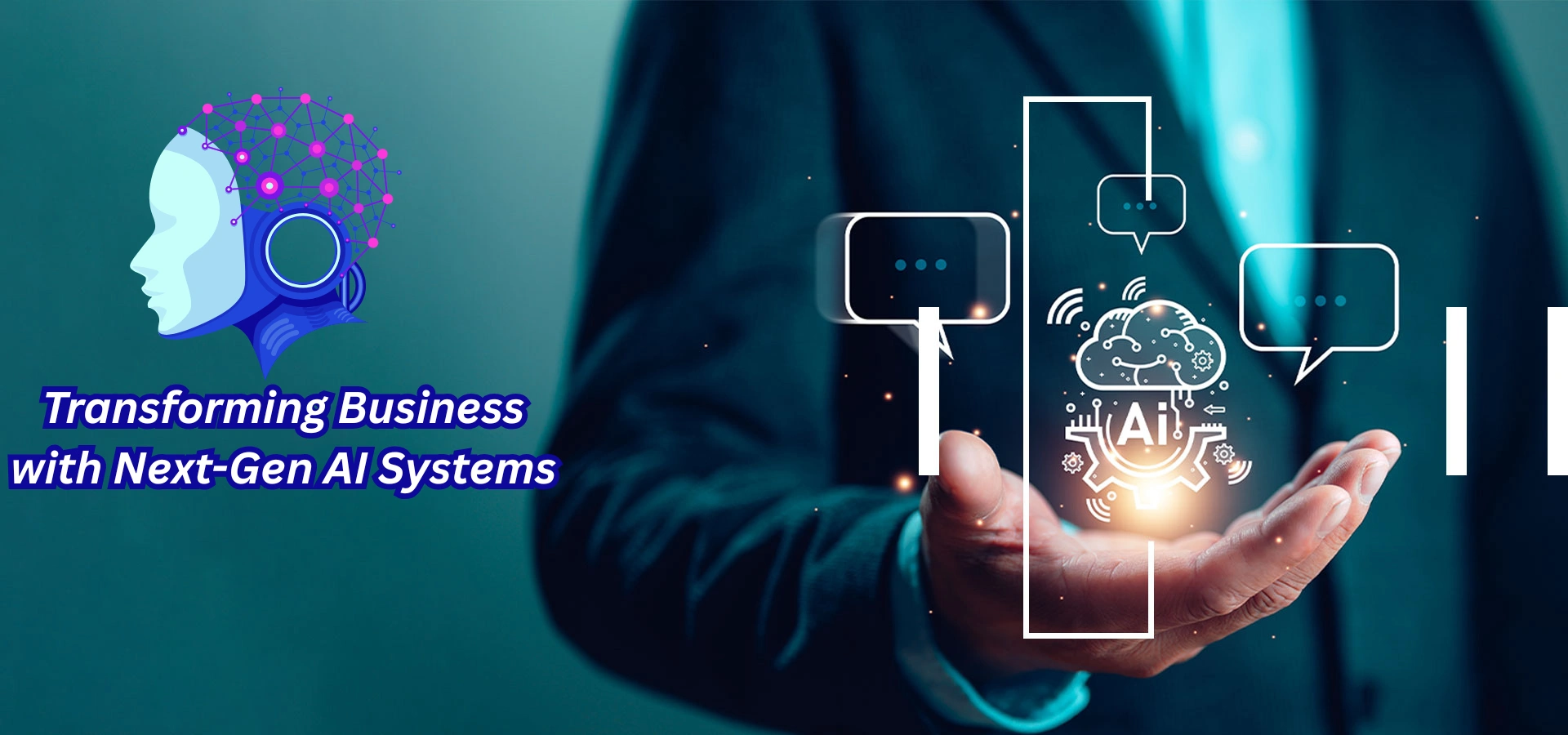
Artificial Intelligence (AI) is no longer a futuristic concept—it is a fundamental driver of business transformation across every industry. From automating workflows to predicting market behavior, AI has become the core engine behind modern digital enterprises. Yet, realizing the true power of AI requires more than just tools and algorithms. It requires strategic expertise—someone who can ensure that AI systems truly integrate into business operations, complement human workflows, and generate measurable results. This is where the AI Integration Specialist plays a pivotal role.
An AI Integration Specialist bridges the gap between advanced AI technologies and real-world business needs. They ensure that AI systems are not only implemented correctly but optimized for long-term performance and scalable growth. As companies continue to adopt next-gen AI systems—like generative AI, predictive analytics, NLP-powered tools, and automation platforms—these specialists become essential to guiding organizations through a smooth and strategic transition.
This article explores the evolving role of AI Integration Specialists, the technologies they implement, the challenges they solve, and the business transformations enabled by next-gen AI systems.
The Evolving Role of an AI Integration Specialist
The job of an AI Integration Specialist goes far beyond coding. It requires a blend of technical expertise, business understanding, and strategic decision-making. These professionals design AI architectures, integrate machine learning models into existing systems, automate workflows, and ensure successful human-AI collaboration.
Core responsibilities include:
✔ 1. Evaluating Business Needs
AI Integration Specialists begin by studying business workflows, gaps, inefficiencies, and opportunities. They align AI solutions with specific organizational goals such as lowering costs, improving efficiency, personalizing customer experiences, or accelerating innovation.
✔ 2. Selecting AI Tools and Technologies
With a vast ecosystem of AI tools available—such as LLMs, RPA bots, ML frameworks, no-code AI builders, and cloud AI services—the specialist determines which combination will yield the best results.
✔ 3. Integrating AI Into Existing Systems
Integration requires connecting AI models with enterprise software like CRMs, ERPs, HRMSs, and customer service systems. It involves REST APIs, automation pipelines, cloud orchestration, and back-end engineering.
✔ 4. Fine-Tuning and Optimizing AI Models
AI must be trained on relevant company data. Specialists evaluate model performance, improve accuracy, and ensure real-time efficiency.
✔ 5. Managing Data Pipelines
They work with structured and unstructured data, building secure and scalable data pipelines for AI training and inference.
✔ 6. Ensuring Security and Compliance
AI introduces new privacy and cybersecurity challenges. Specialists enforce governance models and ensure compliance with regional and global standards.
✔ 7. Driving Change Management
AI transformation affects culture, roles, and workflows. Specialists help teams adopt AI smoothly by providing training and onboarding strategies.
Why AI Integration Matters More Than Ever
Businesses today aren’t just implementing AI—they are transforming entire operations to become AI-powered. This makes integration crucial.
AI integration solves major business challenges:
💡 Automation gaps in repetitive and labor-intensive tasks
💡 Inefficient workflows slowing productivity
💡 Data silos preventing decision-making
💡 Lack of real-time analytics for quick strategic decisions
💡 Customer experience challenges requiring personalization
💡 High operational costs that AI can optimize
💡 Skills shortages in manual processes
AI Integration Specialists create systems that eliminate these hurdles practically and seamlessly.
Next-Gen AI Systems Driving Business Transformation
Modern companies rely on next-generation AI technologies to build intelligent and autonomous systems. An AI Integration Specialist must understand these technologies deeply.
Here are the leading next-gen AI systems shaping business:
1. Generative AI Systems
Generative AI (like GPT, Claude, Gemini, etc.) has changed content creation, product design, customer service, and automation.
Used for:
- Text and image generation
- Automated marketing
- Chatbots and virtual agents
- Software code generation
- Data summarization
It enables efficiency at a scale never seen before.
2. Machine Learning Models
Traditional ML models power critical decision-making systems in finance, healthcare, logistics, and retail.
ML supports:
- Predictive analytics
- Fraud detection
- Demand forecasting
- Quality control
- Personalized recommendations
Integration ensures these models work smoothly with enterprise data systems.
3. NLP and Speech AI
Natural Language Processing deepens human-computer interaction.
Used for:
- Chatbots & voice assistants
- Document analysis
- Sentiment analysis
- Compliance monitoring
Companies increasingly use conversational AI for customer support and customer interaction.
4. Robotic Process Automation (RPA)
RPA bots automate structured tasks such as invoicing, data entry, form processing, and reconciliation.
Benefits:
- Faster operations
- Fewer errors
- Reduced labor costs
AI Integration Specialists connect RPA bots with AI systems to build “smart automation.”
5. AI-Powered Predictive Analytics
Predictive insights help businesses anticipate trends and make proactive decisions.
Used in:
- Supply chain forecasting
- Loan risk analysis
- Employee attrition prediction
- Maintenance scheduling
Integration ensures real-time visibility into business performance.
Key Skills of an AI Integration Specialist
To implement next-gen AI systems successfully, specialists must master a combination of technical, strategic, and communication skills.
Top skills include:
🔹 Knowledge of AI and ML frameworks (TensorFlow, PyTorch)
🔹 Integration platforms (APIs, Webhooks, Cloud orchestrators)
🔹 Programming skills (Python, Java, JS)
🔹 Data engineering & ETL pipeline design
🔹 Knowledge of LLMs and prompt engineering
🔹 Cloud AI architecture (AWS, Azure, GCP)
🔹 Cybersecurity essentials
🔹 Business process optimization
🔹 Change management and communication
This unique combination makes AI Integration Specialists extremely valuable and in high demand.
How AI Integration Specialists Transform Businesses
Let’s explore how AI specialists create real-world impact across industries.
1. They Modernize Legacy Systems
Many enterprises still rely on outdated, manual, or on-premise systems. AI specialists help convert these into intelligent, automated ecosystems without disrupting operations.
2. They Enable Autonomous Decision-Making
AI systems can make real-time decisions—adjusting inventory, setting prices, or routing tasks—reducing delays and increasing efficiency.
3. They Enhance Customer Experience
From personalized recommendations to 24/7 chatbots, AI enhances every customer touchpoint.
4. They Drive Innovation
With AI integrated into operations, companies can experiment faster, launch smarter products, and innovate at scale.
5. They Reduce Operational Costs
Intelligent automation lowers labor costs, minimizes errors, and speeds up processes.
6. They Build a Future-Ready Workforce
AI Integration Specialists train teams to work alongside AI, boosting productivity and reducing resistance to change.
Industry Use Cases of AI Integration Specialists
AI integration plays a vital role across industries.
Healthcare
- AI diagnostics
- Automated patient reports
- Virtual health assistants
- Predictive treatment planning
Finance
- Fraud detection AI
- Algorithmic trading
- Loan risk assessment
- Customer verification automation
Retail
- Inventory AI
- Personalized shopping
- Automated fulfillment
- Market trend prediction
Manufacturing
- Predictive maintenance
- AI-driven quality control
- Robotics integration
- Supply chain automation
Real Estate
- Property value prediction
- Virtual tour automation
- Customer inquiry chatbots
- Market insights AI
HR & Talent
- AI-powered recruitment
- Employee performance forecasting
- Automated onboarding
Next-gen AI systems bring transformation to every department and industry.
The Future of AI Integration Specialists
The demand for AI Integration Specialists is expected to surge as businesses accelerate their digital transformation. Their future role includes:
⭐ Managing autonomous AI agents
⭐ Overseeing AI governance and ethics
⭐ Designing enterprise-wide AI ecosystems
⭐ Integrating hybrid human-AI teams
⭐ Ensuring sustainable AI scaling
AI will continue evolving, and so will their responsibilities.
Conclusion
AI Integration Specialists are the architects behind successful AI-driven transformation. They ensure that next-gen AI systems—whether generative AI, machine learning, NLP, RPA, or predictive analytics—work together seamlessly to optimize business outcomes.
Their unique blend of technical expertise and business insight enables companies to adopt AI confidently and effectively. As AI continues to shape the future, AI Integration Specialists will be the driving force behind intelligent enterprises, empowering businesses to scale faster, innovate smarter, and operate more efficiently.