
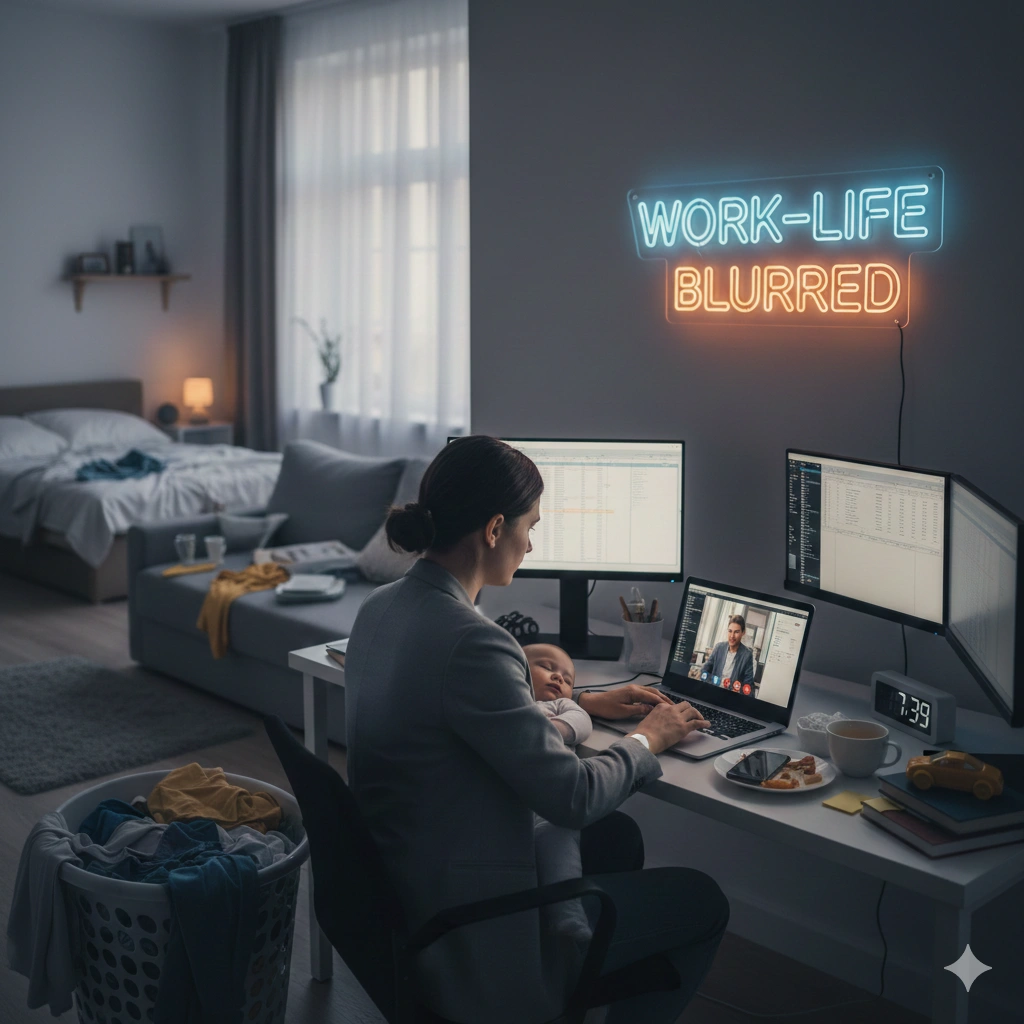
Introduction
Work From Home (WFH) jobs have transformed the modern workplace. What once seemed like a dream—working in comfortable clothes, avoiding traffic, and spending more time with family—has now become a reality for millions of employees worldwide. However, beneath the surface of flexibility and convenience lies a serious and growing challenge: blurred work-life boundaries.
When the home becomes the office, the line between professional responsibilities and personal life often fades. Employees struggle to “switch off,” work hours stretch endlessly, and personal time is frequently interrupted by emails, messages, and virtual meetings. Over time, this imbalance leads to stress, burnout, mental fatigue, and declining productivity.
This article explores the real issues caused by blurred work-life boundaries in WFH jobs, why they occur, how they impact employees mentally and physically, and what can be done to restore balance.
Understanding Work-Life Boundaries
Work-life boundaries are the clear limits that separate professional duties from personal life. In traditional office settings, these boundaries were naturally defined—employees left their workplace at a fixed time and physically moved into their personal environment.
In remote work, however, these boundaries often disappear. The same space is used for meetings, meals, rest, and family time. Without intentional structure, work easily spills into personal life.
Why Work-Life Boundaries Blur in WFH Jobs
1. No Fixed Working Hours
Many remote jobs promote flexibility, but flexibility often turns into unlimited availability. Employees feel pressured to respond quickly at any time, even outside official work hours.
Managers may unintentionally expect employees to be available early mornings, late nights, or weekends because “they are already at home.”
2. Constant Digital Connectivity
Emails, instant messaging apps, project management tools, and video calls keep employees always connected. Notifications pop up during meals, family time, or even late at night.
This constant connectivity creates the feeling that work never truly ends.
3. Home Becomes the Office
When your bedroom, living room, or dining table doubles as your office, the brain struggles to distinguish between work mode and rest mode. This physical overlap makes it difficult to relax even after work hours.
4. Lack of Clear Expectations from Employers
Many organizations fail to set clear policies around working hours, response time, and availability. This ambiguity pushes employees to overwork to prove productivity and commitment.
5. Fear of Job Insecurity
Remote workers often feel they must work harder and longer to remain visible and valuable. The fear of being replaced or overlooked leads to overworking and constant availability.
Common Signs of Blurred Work-Life Boundaries
- Working beyond official hours regularly
- Checking emails late at night or early morning
- Feeling guilty for taking breaks
- Difficulty disconnecting from work mentally
- Skipping meals or family time due to work
- Feeling exhausted despite being at home
These signs indicate that work has taken over personal life.
Mental Health Impact of Blurred Boundaries
1. Chronic Stress
When work never stops, the body remains in a constant state of stress. Over time, this leads to anxiety, irritability, and emotional exhaustion.
2. Burnout
Burnout is one of the most serious consequences of blurred work-life boundaries. Employees feel drained, unmotivated, and disconnected from their work.
Symptoms of burnout include:
- Loss of interest in work
- Constant fatigue
- Reduced performance
- Emotional numbness
3. Anxiety and Depression
The inability to disconnect from work increases anxiety levels. Employees worry about deadlines, messages, and performance even during personal time. Prolonged stress may lead to depression.
4. Reduced Focus and Productivity
Ironically, working longer hours does not increase productivity. Mental fatigue reduces concentration, creativity, and decision-making ability.
Physical Health Problems Linked to WFH Imbalance
Blurred work-life boundaries also affect physical health:
- Eye strain due to prolonged screen time
- Back and neck pain from poor ergonomics
- Sleep disorders due to late-night work
- Weight gain or loss due to irregular meals
- Headaches and migraines
Without breaks and movement, physical well-being suffers significantly.
Impact on Personal Relationships
1. Family Conflicts
When employees are mentally absent during family time, misunderstandings and conflicts arise. Family members may feel ignored or undervalued.
2. Reduced Quality Time
Even when physically present, remote workers often remain mentally engaged with work. This reduces the quality of interactions with loved ones.
3. Social Isolation
Long working hours at home reduce opportunities for social interaction, leading to loneliness and emotional disconnect.
How Employers Contribute to the Problem
While employees play a role, organizations also contribute to blurred boundaries by:
- Encouraging “always-on” culture
- Scheduling meetings outside work hours
- Measuring productivity by availability rather than outcomes
- Failing to respect time zones
- Ignoring mental health concerns
Without supportive policies, employees struggle to protect their personal time.
Challenges Unique to Different Types of Remote Workers
1. Freelancers
Freelancers often work irregular hours and juggle multiple clients, making it difficult to set boundaries. Fear of losing clients pushes them to be constantly available.
2. Parents Working from Home
Parents face the dual responsibility of childcare and work. Without clear boundaries, work hours extend late into the night.
3. Entry-Level Employees
Junior employees often overwork to prove themselves, leading to unhealthy work habits early in their careers.
Long-Term Consequences of Poor Work-Life Balance
If left unaddressed, blurred boundaries can lead to:
- Career dissatisfaction
- High employee turnover
- Long-term health problems
- Reduced motivation
- Loss of work passion
Organizations also suffer from decreased productivity and increased burnout rates.
How Employees Can Restore Work-Life Boundaries
1. Set Fixed Working Hours
Define clear start and end times for your workday. Communicate these hours to your team and stick to them consistently.
2. Create a Dedicated Workspace
Even a small, designated workspace helps the brain separate work from personal life. Avoid working from bed or couch whenever possible.
3. Turn Off Notifications After Work
Disable work-related notifications outside working hours. This simple step can significantly reduce stress.
4. Take Regular Breaks
Short breaks improve focus and prevent burnout. Step away from screens, stretch, or take a walk.
5. Learn to Say No
Setting boundaries may feel uncomfortable at first, but it is essential. Respectfully decline tasks outside your work hours when possible.
Role of Employers in Maintaining Balance
Employers can help by:
- Defining clear working hours
- Respecting employee downtime
- Encouraging regular breaks
- Focusing on output, not availability
- Providing mental health support
A healthy workforce leads to better results.
The Future of Work-Life Balance in Remote Jobs
As remote work becomes permanent, addressing work-life balance is no longer optional. Organizations and employees must collaborate to create sustainable work models.
Hybrid work, flexible schedules with boundaries, and mental health awareness are shaping the future of remote jobs.
Conclusion
Blurred work-life boundaries in WFH jobs are one of the most overlooked challenges of remote work. While working from home offers flexibility and convenience, it also demands discipline, structure, and support.
Without clear boundaries, employees risk burnout, stress, and declining well-being. However, with intentional efforts from both employees and employers, it is possible to enjoy the benefits of remote work without sacrificing personal life.
True success in WFH jobs lies not in working more, but in working smarter—while protecting mental health, relationships, and overall quality of life.