Introduction
Remote jobs have changed the way people work across the world. The freedom to work from home, avoid long commutes, and manage flexible schedules has made remote work highly attractive. For many employees, remote jobs offer comfort, independence, and better control over daily life.
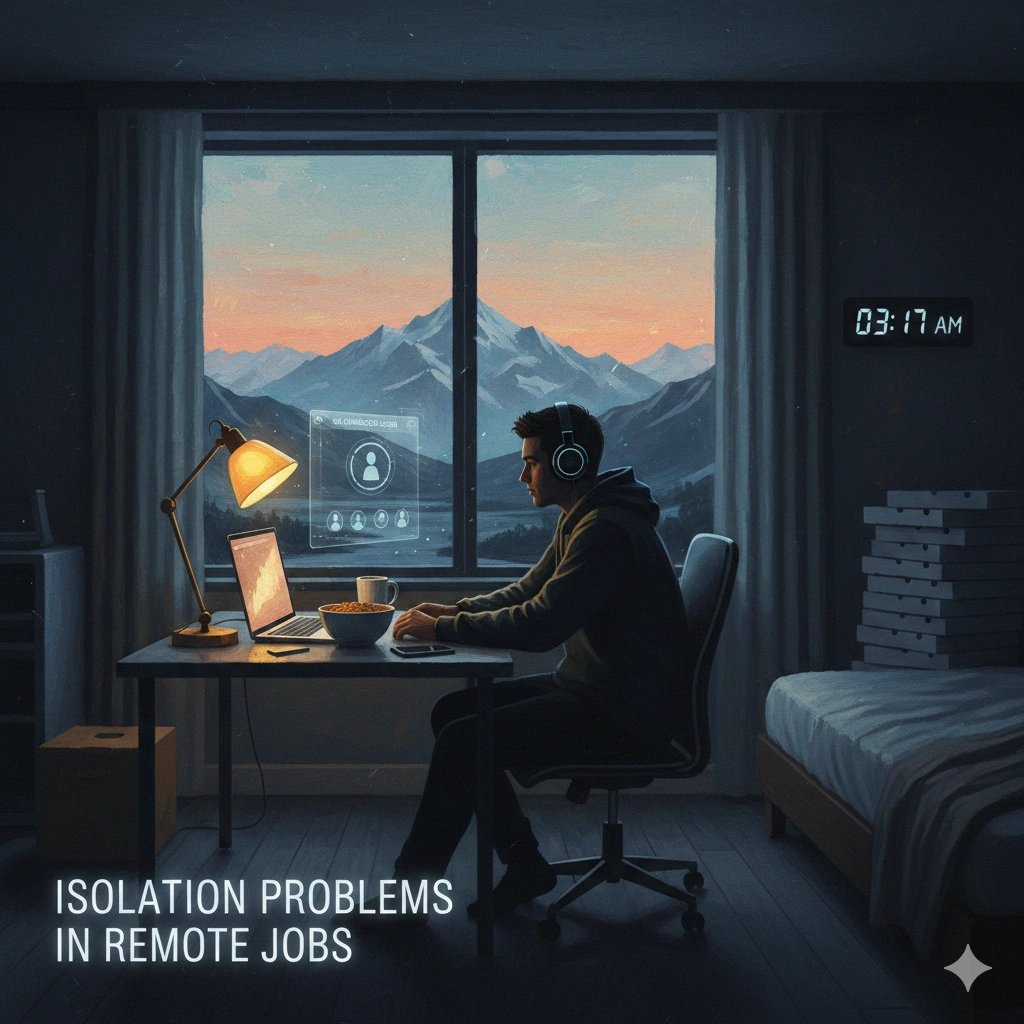
However, behind these advantages lies a serious and often overlooked challenge—isolation. While remote work connects people digitally, it can disconnect them socially and emotionally. The lack of daily human interaction, casual conversations, and shared experiences creates a sense of loneliness that gradually affects mental health, motivation, and job satisfaction.
This article explores the isolation problems in remote jobs, examining how isolation develops, its emotional and professional impact, and why it is one of the biggest hidden struggles of remote work today.
1. What Isolation Means in Remote Jobs
Isolation in remote jobs is not just about being physically alone. It is the emotional and social disconnect employees feel when they lack meaningful interaction with colleagues, managers, and teams.
Remote workers may attend meetings and exchange messages daily, yet still feel isolated. Digital communication often focuses on tasks, leaving little space for personal connection or emotional support.
Over time, this emotional distance creates a sense of invisibility and detachment from work.
2. Absence of Daily Human Interaction
Traditional offices naturally encourage interaction—greetings, casual chats, teamwork, and shared breaks. Remote jobs remove these everyday moments.
Without spontaneous conversations or face-to-face engagement, employees miss human connection. Video calls feel formal and purpose-driven, not social.
This absence of daily interaction slowly increases feelings of loneliness and emotional fatigue.
3. Loneliness Behind the Screen
Remote workers often work alone for long hours, staring at screens with minimal interaction. Even introverted individuals may struggle with prolonged isolation.
Loneliness does not always appear immediately. It builds gradually and becomes noticeable when motivation drops or emotional exhaustion sets in.
For those living alone, isolation can become overwhelming and deeply affect mental well-being.
4. Emotional Disconnect From the Team
Remote employees may feel disconnected from their teams and company culture. Without shared experiences, it becomes harder to feel like part of a group.
Team bonding activities often feel artificial online. Employees may hesitate to speak openly or share personal thoughts during virtual meetings.
This emotional disconnect reduces trust, collaboration, and engagement.
5. Mental Health Impact of Isolation
Isolation is strongly linked to mental health challenges. Remote workers experiencing isolation often report anxiety, sadness, low motivation, and depression.
The lack of emotional support at work makes it harder to cope with stress. Employees may struggle silently, feeling there is no one to talk to.
Over time, untreated isolation can lead to burnout and emotional withdrawal.
6. Reduced Motivation and Productivity
Isolation affects motivation. When employees feel disconnected, work can start to feel meaningless or monotonous.
Without encouragement or shared goals, employees may lose interest and enthusiasm. Productivity drops, and tasks feel heavier than they should.
This decline is often misunderstood as laziness rather than emotional exhaustion.
7. Communication Feels Transactional
In remote jobs, communication is often limited to work-related tasks. Messages focus on deadlines, updates, and performance.
There is little room for personal conversations or emotional expression. Over time, communication feels robotic and transactional.
This lack of warmth increases emotional distance and isolation.
8. Lack of Informal Support Systems
In offices, employees often rely on informal support—quick advice, shared frustrations, or friendly encouragement.
Remote workers lose access to these support systems. Asking for help online may feel awkward or disruptive.
Without informal support, small problems feel bigger and more stressful.
9. New Employees Feel the Isolation More
Isolation is especially challenging for new remote employees. Onboarding without physical interaction makes it harder to understand company culture.
New hires may feel hesitant to ask questions or build relationships. They often feel lost and disconnected.
This early isolation affects confidence and long-term engagement.
10. Social Skills Slowly Decline
Prolonged isolation can affect social confidence. Remote workers may feel uncomfortable interacting in person after long periods of isolation.
Virtual communication does not fully develop emotional intelligence or interpersonal skills.
Over time, employees may withdraw socially even outside work.
11. Isolation Increases Work Stress
When isolated, stress feels heavier. Employees lack emotional outlets to share concerns or frustrations.
Problems that could be solved through quick conversations become mentally exhausting.
Isolation amplifies stress and reduces coping ability.
12. Blurred Identity and Sense of Belonging
Work plays a role in identity and purpose. Isolation weakens this connection.
Remote workers may feel disconnected from organizational goals and values. Work becomes just tasks, not a shared mission.
This loss of belonging reduces job satisfaction and loyalty.
13. Lack of Recognition Feels Worse in Isolation
Recognition is important for motivation. In remote jobs, appreciation is often limited or delayed.
When recognition is missing, isolation makes it feel more personal. Employees may feel ignored or undervalued.
This emotional impact is stronger without supportive colleagues nearby.
14. Isolation Affects Career Growth
Networking and mentorship are harder in remote settings. Isolation limits informal learning and guidance.
Employees may feel disconnected from leadership and career opportunities.
This creates insecurity and frustration about professional growth.
15. Family Presence Does Not Replace Workplace Connection
Some assume that working from home with family reduces isolation. However, family interaction is not the same as professional connection.
Employees may still feel professionally isolated even when surrounded by people.
The lack of work-related social identity remains.
16. Time Zone Differences Increase Isolation
Remote teams across different time zones reduce real-time interaction.
Employees may work alone while others are offline. Delayed responses increase feelings of disconnection.
This time gap intensifies isolation and loneliness.
17. Overworking as a Response to Isolation
Some employees respond to isolation by overworking. Work becomes a way to fill emotional gaps.
Overworking increases burnout and worsens mental health.
Isolation and overwork often reinforce each other.
18. Long-Term Effects of Isolation in Remote Jobs
Unaddressed isolation can lead to chronic stress, depression, burnout, and disengagement.
Employees may lose interest in their careers or struggle with emotional stability.
Long-term isolation impacts both personal life and professional performance.
19. Why Isolation Is Often Ignored
Isolation is invisible. Employees may appear productive while struggling emotionally.
Managers may assume silence means everything is fine.
Without open conversations, isolation remains hidden.
20. Addressing Isolation Is Essential for Sustainable Remote Work
Remote work is here to stay, but isolation cannot be ignored.
Organizations must encourage connection, emotional support, and inclusive communication. Employees should also actively seek interaction and balance.
Remote work can be fulfilling only when human connection is prioritized.
Conclusion
Isolation is one of the most serious and underestimated problems in remote jobs. While remote work offers flexibility and convenience, it can quietly disconnect employees from human interaction, emotional support, and a sense of belonging.
Understanding the isolation problems in remote jobs is essential for creating healthier work environments. Employers must foster connection, and employees must acknowledge their emotional needs.
Remote work should not mean working alone emotionally. Sustainable remote careers depend on connection, understanding, and support.