
Introduction
Work from home (WFH) has transformed the modern workplace. Once considered a luxury or rare arrangement, remote work became a global necessity during the COVID-19 pandemic and has continued as a preferred model for many organizations and employees. While working from home offers flexibility, reduced commuting time, and better work-life balance on paper, the reality is far more complex.
Millions of employees across the world face daily challenges while working remotely. From mental health struggles and isolation to productivity issues and blurred personal boundaries, work from home is not always as comfortable as it seems. These problems often go unnoticed by employers, yet they deeply impact performance, motivation, and overall well-being.
This article explores the real, daily problems employees face while working from home, shedding light on physical, emotional, professional, and technological challenges. Understanding these issues is crucial for both employees and organizations to build healthier, more productive remote work environments.
1. Lack of Proper Work Environment
One of the most common work from home problems is the absence of a dedicated workspace. Many employees work from bedrooms, dining tables, or couches, which are not designed for long working hours.
Without an ergonomic chair, proper desk height, or adequate lighting, employees often experience back pain, neck strain, eye fatigue, and posture issues. Over time, these physical discomforts can lead to chronic health problems and reduced productivity.
Additionally, limited space in small homes or shared accommodations makes it difficult to maintain focus, especially for employees living with family members or roommates.
2. Constant Distractions at Home
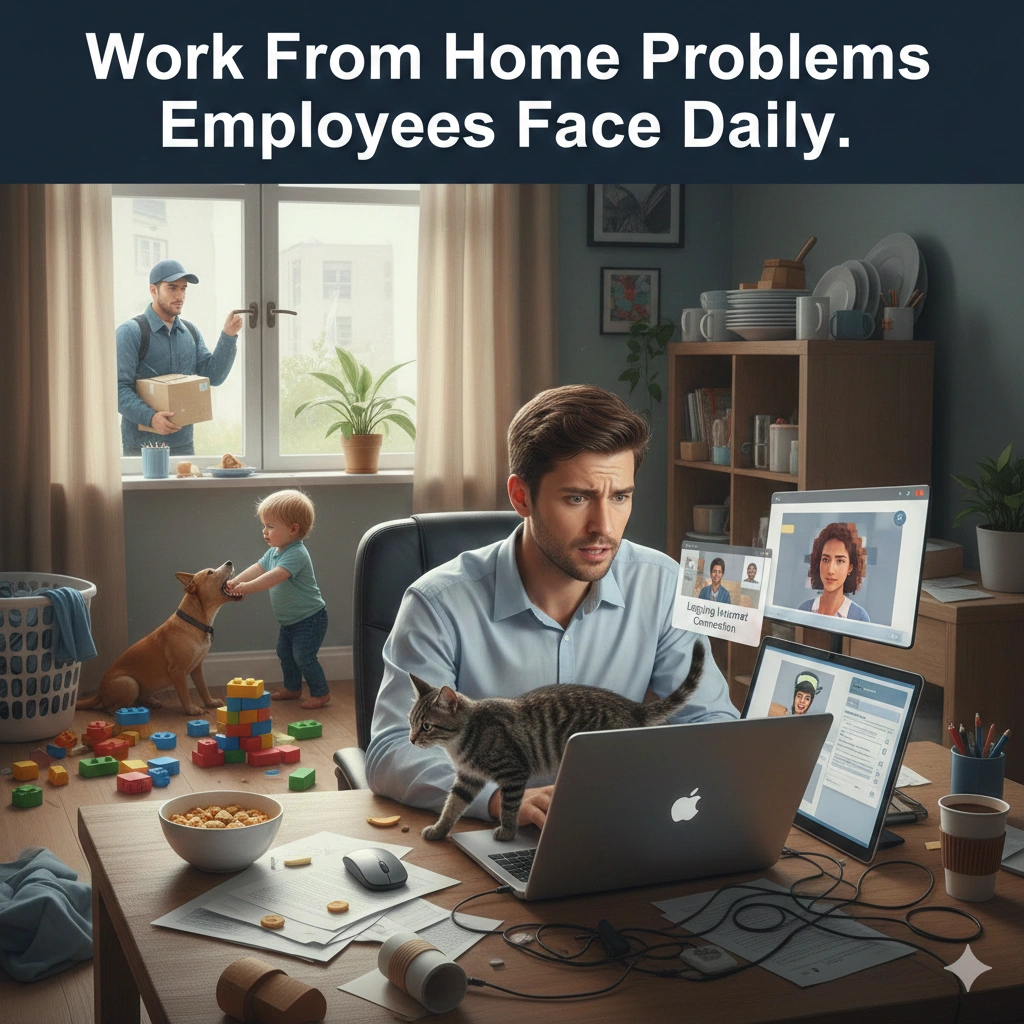
Home environments are full of distractions that are not present in traditional offices. Family members, children, pets, household chores, television, and mobile phones frequently interrupt work hours.
Employees often struggle to concentrate during meetings or complete tasks without interruptions. Parents working from home face even greater challenges balancing childcare, online schooling, and professional responsibilities simultaneously.
These distractions increase stress levels and often force employees to work longer hours to compensate for lost productivity.
3. Blurred Work-Life Boundaries
One of the biggest disadvantages of working from home is the lack of clear separation between professional and personal life. When the office is at home, work never truly ends.
Employees often feel pressure to be available beyond working hours, respond to emails late at night, or attend meetings across different time zones. This constant connectivity leads to burnout, fatigue, and emotional exhaustion.
Over time, the inability to disconnect from work negatively affects relationships, personal time, and mental health.
4. Increased Workload and Unrealistic Expectations
Many employees report that working from home has actually increased their workload. Employers may assume that remote employees are always available, leading to excessive meetings, frequent check-ins, and unrealistic deadlines.
The absence of physical visibility sometimes forces employees to overwork just to prove their productivity. This “always online” culture creates pressure, anxiety, and a fear of being perceived as lazy or unproductive.
As a result, employees struggle to maintain a healthy balance between efficiency and overworking.
5. Communication Gaps and Misunderstandings
Remote work heavily depends on digital communication tools such as emails, messaging apps, and video calls. However, virtual communication lacks the clarity of face-to-face interactions.
Messages can be misunderstood, tone may be misinterpreted, and important details may get lost. Delayed responses and time zone differences further complicate collaboration.
These communication gaps often lead to frustration, repeated work, conflicts, and reduced team cohesion.
6. Feeling of Isolation and Loneliness
Social interaction is a vital part of workplace culture. In an office, employees casually interact, share ideas, and build relationships. Working from home eliminates these daily social connections.
Many employees experience loneliness, isolation, and a sense of disconnection from their teams. This emotional distance can reduce motivation, creativity, and engagement.
For individuals living alone, prolonged remote work can significantly impact mental health, leading to anxiety and depression.
7. Mental Health Challenges
Mental health issues are among the most serious work from home problems employees face daily. Stress, anxiety, burnout, and depression have become increasingly common in remote work settings.
The pressure to perform, lack of routine, isolation, and constant screen time contribute to emotional fatigue. Employees often struggle silently without access to immediate support from colleagues or managers.
Without proper mental health resources, these issues can escalate and affect both personal and professional life.
8. Technology and Internet Issues
Reliable technology is the backbone of remote work. Unfortunately, many employees face frequent internet disruptions, power cuts, outdated devices, or software compatibility issues.
Slow internet connections interrupt meetings, delay submissions, and create embarrassment during virtual presentations. Technical problems waste time and increase frustration.
Employees in rural areas or developing regions face even greater challenges due to limited digital infrastructure.
9. Excessive Screen Time and Digital Fatigue
Work from home significantly increases screen time. Employees spend hours on laptops, attending virtual meetings, responding to messages, and managing tasks online.
Prolonged screen exposure causes eye strain, headaches, sleep disturbances, and digital fatigue. Continuous video meetings, also known as “Zoom fatigue,” drain mental energy and reduce focus.
This constant digital engagement makes it harder for employees to relax even after work hours.
10. Lack of Team Collaboration and Creativity
Remote work limits spontaneous discussions and brainstorming sessions that naturally happen in offices. Scheduled meetings often feel rigid and task-focused, leaving little room for creativity.
Employees may hesitate to share ideas virtually or feel disconnected from group decision-making. New employees especially struggle to integrate into teams and understand company culture.
This lack of collaboration can slow innovation and reduce job satisfaction.
11. Difficulty in Career Growth and Visibility
Many employees worry that working from home affects their career growth. Limited interaction with senior management reduces visibility and networking opportunities.
Remote workers may feel overlooked for promotions, leadership roles, or important projects compared to in-office employees. Performance may go unnoticed without physical presence.
This uncertainty creates insecurity and reduces long-term motivation among employees.
12. Household Responsibilities Falling Disproportionately
Working from home often increases household responsibilities, especially for women. Cooking, cleaning, caregiving, and family expectations frequently overlap with work hours.
Balancing professional tasks with domestic duties leads to exhaustion and reduced productivity. Employees may feel guilty for neglecting either work or family.
This invisible labor adds emotional and physical strain to daily routines.
13. Lack of Structured Routine
Offices provide a structured schedule that helps employees stay disciplined. At home, routines often become irregular.
Late waking hours, skipped breaks, inconsistent meal times, and extended work sessions disrupt physical and mental well-being. Without a clear schedule, employees struggle to maintain consistency and focus.
Over time, lack of routine leads to poor time management and decreased efficiency.
14. Data Security and Privacy Concerns
Remote work increases the risk of data breaches and privacy issues. Employees may use personal devices, unsecured Wi-Fi networks, or shared computers.
Cybersecurity threats such as phishing attacks, hacking, and data leaks pose serious risks to organizations and employees alike. Many workers lack proper training in digital security practices.
Fear of mistakes adds stress and pressure to daily work.
15. Difficulty Taking Leaves and Breaks
Ironically, working from home makes it harder for employees to take breaks or leaves. Since they are already at home, employees may feel obligated to work even when sick or mentally exhausted.
Lunch breaks are often skipped, and vacations are interrupted by work calls. This constant availability prevents proper rest and recovery.
Without adequate breaks, productivity and health decline over time.
Conclusion
Work from home has undeniably changed the way we work, offering flexibility and convenience. However, it also comes with significant daily challenges that affect employees physically, mentally, and emotionally.
From isolation and burnout to technology issues and blurred boundaries, these problems highlight the need for better remote work policies. Employers must recognize these challenges and provide support through flexible schedules, mental health resources, clear communication, and realistic expectations.
Employees, on the other hand, should establish routines, set boundaries, and prioritize self-care. Only through mutual understanding and proactive solutions can work from home become a sustainable and healthy work model for the future.