
Introduction
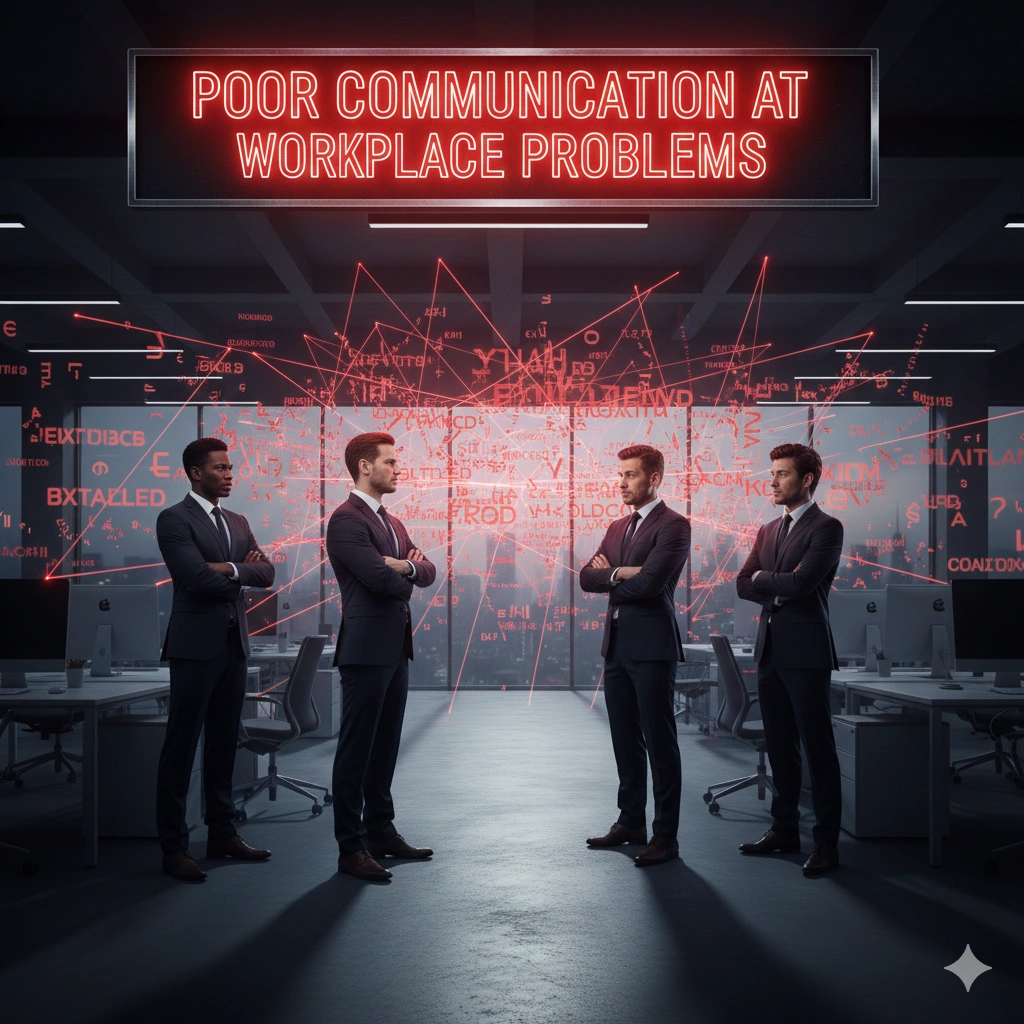
Communication is the backbone of any successful workplace. Clear, open, and effective communication helps employees understand their roles, collaborate efficiently, and work toward shared goals. When communication breaks down, even the most talented teams struggle to perform. Poor communication at the workplace is one of the most common and damaging organizational problems, affecting productivity, morale, relationships, and overall business success.
Poor communication can take many forms—unclear instructions, lack of feedback, information silos, ineffective meetings, or misinterpretation of messages. In today’s fast-paced and increasingly remote work environment, communication challenges have become even more complex. When employees do not receive the right information at the right time, confusion and frustration quickly follow.
This article explores poor communication at workplace problems, examining their causes, impacts on employees and organizations, and strategies to improve communication for a healthier and more productive work environment.
Understanding Poor Communication in the Workplace
Poor communication occurs when information is not conveyed clearly, accurately, or effectively between individuals or teams. This can include verbal, written, or non-verbal communication failures.
Examples of poor workplace communication include:
- Unclear job expectations
- Inconsistent messages from management
- Lack of feedback or recognition
- Ineffective meetings
- Poor listening skills
Effective communication is not just about sharing information—it is about ensuring understanding.
Common Causes of Poor Workplace Communication
1. Lack of Clear Leadership
When leaders fail to communicate vision, goals, or priorities clearly, employees feel directionless.
2. Information Silos
Departments that do not share information create gaps that hinder collaboration and efficiency.
3. Poor Listening Skills
Communication is a two-way process. When managers or employees fail to listen actively, misunderstandings arise.
4. Overreliance on Digital Tools
Emails, messages, and project tools can be misinterpreted without context or tone.
5. Cultural and Language Barriers
Diverse workplaces may face communication challenges due to different cultural norms or language proficiency levels.
6. Fear of Speaking Up
Employees who fear negative consequences may withhold feedback or concerns.
Types of Poor Communication Problems
1. Unclear Instructions
Employees receive vague or incomplete directions, leading to errors and rework.
2. Inconsistent Messaging
Different managers provide conflicting information, causing confusion.
3. Lack of Feedback
Employees do not know whether they are meeting expectations or how to improve.
4. Ineffective Meetings
Meetings without clear agendas or outcomes waste time and energy.
5. Poor Conflict Communication
Issues are ignored or handled poorly, escalating workplace conflicts.
Impact of Poor Communication on Employees
1. Reduced Job Satisfaction
Employees feel frustrated when they do not understand expectations or decisions.
2. Increased Stress and Anxiety
Uncertainty and confusion create mental strain and emotional fatigue.
3. Low Confidence
Lack of feedback or clarity can make employees doubt their abilities.
4. Decreased Engagement
Employees disengage when communication feels one-sided or unclear.
5. Workplace Conflicts
Misunderstandings often lead to unnecessary arguments and tension.
Impact on Team Collaboration
Poor communication weakens teamwork. When information is not shared openly:
- Teams work in isolation
- Duplicate efforts occur
- Deadlines are missed
- Trust breaks down
Effective collaboration depends on timely and transparent communication.
Impact of Poor Communication on Organizations
1. Decreased Productivity
Employees waste time clarifying tasks, correcting mistakes, or waiting for information.
2. Higher Employee Turnover
Persistent communication issues push employees to seek healthier work environments.
3. Poor Decision-Making
Decisions made with incomplete or inaccurate information often fail.
4. Reduced Customer Satisfaction
Employees who lack information cannot serve customers effectively.
5. Damage to Company Culture
Poor communication fosters mistrust, negativity, and disengagement.
Poor Communication and Employee Mental Health
Poor workplace communication contributes to mental health challenges such as:
- Chronic stress
- Anxiety
- Burnout
- Emotional exhaustion
Employees may feel unsupported or isolated, affecting their overall well-being.
Poor Communication in Remote and Hybrid Work
Remote work has increased reliance on digital communication, amplifying potential issues. Common remote communication problems include:
- Delayed responses
- Misinterpreted messages
- Lack of informal interactions
- Reduced clarity
Effective remote communication requires intentional strategies and tools.
The Role of Managers in Workplace Communication
Managers play a critical role in shaping communication culture. Effective managers:
- Communicate expectations clearly
- Encourage open dialogue
- Provide regular feedback
- Listen actively
Poor managerial communication often cascades into broader organizational issues.
Signs Your Workplace Has Communication Problems
- Frequent misunderstandings
- Repeated mistakes
- Low morale
- Employees avoiding discussions
- Conflicting information
- Lack of clarity on goals
Recognizing these signs early allows organizations to take corrective action.
How Employees Cope With Poor Communication
Employees may:
- Rely on assumptions
- Seek informal clarification
- Over-communicate defensively
- Withdraw from discussions
These coping mechanisms highlight the need for systemic communication improvements.
Strategies to Improve Workplace Communication
1. Establish Clear Communication Channels
Define how and where information should be shared.
2. Encourage Open Feedback
Create safe spaces for employees to share ideas and concerns.
3. Train Employees and Managers
Communication skills training improves clarity and empathy.
4. Improve Meeting Effectiveness
Use agendas, clear objectives, and follow-ups.
5. Promote Active Listening
Encourage listening as much as speaking.
The Role of HR in Communication Improvement
HR can support better communication by:
- Developing communication policies
- Conducting engagement surveys
- Providing training programs
- Mediating conflicts
HR involvement ensures communication aligns with organizational values.
Long-Term Benefits of Effective Communication
Organizations that improve communication experience:
- Higher employee engagement
- Better teamwork
- Increased productivity
- Reduced conflict
- Stronger organizational culture
Clear communication supports sustainable success.
Future of Workplace Communication
The future workplace emphasizes transparency, inclusivity, and adaptability. Technology will continue to shape communication, but human connection remains essential.
Organizations must balance digital tools with empathy and clarity.
Conclusion
Poor communication at workplace problems can undermine even the strongest organizations. When communication fails, confusion, stress, and disengagement follow. Addressing communication issues requires commitment from leadership, managers, and employees alike.
By prioritizing clear, open, and respectful communication, organizations can create healthier workplaces where employees feel informed, valued, and empowered. Effective communication is not just a soft skill—it is a critical business necessity.