Introduction
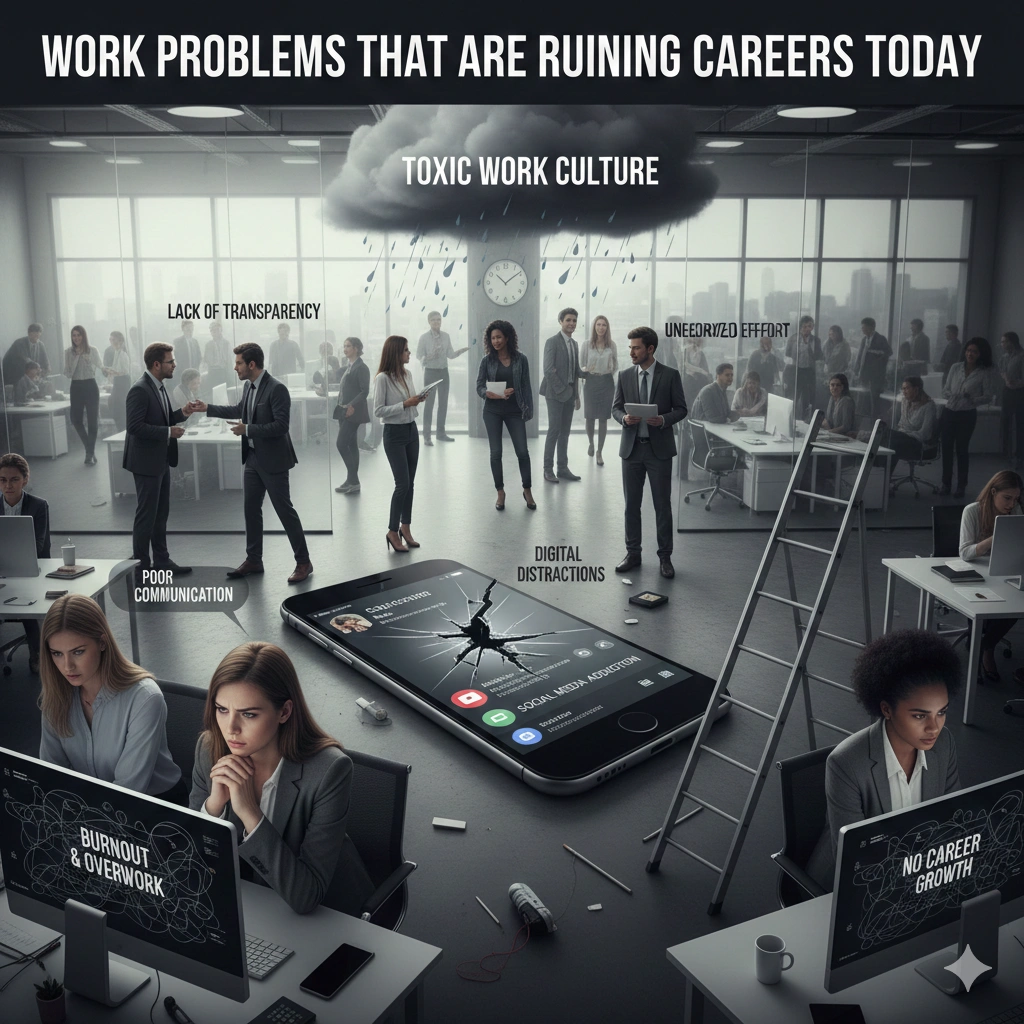
Careers today are being damaged not by lack of talent or hard work, but by deep-rooted workplace problems that many people silently endure. In the modern professional world, having skills and qualifications is no longer enough to guarantee stability, satisfaction, or growth. Millions of employees feel stuck, stressed, undervalued, and unsure about their future—not because they are incapable, but because the work environment itself is broken.
From toxic leadership and burnout to job insecurity and constant pressure to upskill, work problems today are more complex and damaging than ever before. These issues don’t just affect productivity; they slowly erode confidence, mental health, and long-term career prospects.
This article explores the most serious work problems that are ruining careers today, how they develop, and why so many professionals feel trapped or forced to quit entirely.
1. Chronic Burnout and Overwork Culture
Burnout has become one of the biggest career destroyers of modern times. Employees are expected to do more with less time, fewer resources, and constant availability.
Long hours, unrealistic deadlines, and excessive workloads leave little room for recovery. Over time, burnout reduces creativity, motivation, and focus. Employees begin making mistakes, missing opportunities, and losing confidence in their abilities.
Many professionals push through burnout out of fear—fear of losing their job, being replaced, or appearing weak. Unfortunately, prolonged burnout can permanently harm career growth by reducing performance and damaging professional reputation.
2. Toxic Management and Poor Leadership
Bad leadership ruins more careers than lack of talent. Managers who micromanage, intimidate, ignore feedback, or show favoritism create environments where employees cannot thrive.
Instead of mentoring and supporting growth, toxic managers suppress ideas, discourage initiative, and create fear-based cultures. Employees stop speaking up, stop innovating, and focus only on survival.
Over time, working under poor leadership can stall promotions, reduce visibility, and damage confidence. Many talented employees leave industries entirely after prolonged exposure to toxic management.
3. Lack of Career Growth and Skill Development
Career stagnation is a silent career killer. Many jobs offer stability but no learning, no growth, and no advancement.
Employees remain in the same role for years, performing repetitive tasks while the job market evolves rapidly. Without new skills, professionals become less competitive and more vulnerable to layoffs.
When companies fail to invest in training and development, employees pay the price. Staying too long in stagnant roles can make career transitions difficult and limit future opportunities.
4. Job Insecurity and Fear of Layoffs
Job security has become increasingly fragile. Restructuring, automation, outsourcing, and economic uncertainty have made layoffs common across industries.
Employees constantly worry about being replaced, downsized, or made irrelevant. This fear creates stress, reduces risk-taking, and discourages long-term planning.
Living in constant uncertainty drains mental energy and prevents career confidence. Many professionals feel forced to accept poor treatment or low pay simply to keep their jobs.
5. Poor Work-Life Balance
Work-life imbalance is destroying both careers and personal lives. Many professionals struggle to disconnect from work, even after office hours.
Late-night emails, weekend meetings, and constant notifications make rest impossible. Over time, this leads to health issues, relationship problems, and declining job performance.
Careers suffer when employees are exhausted and emotionally drained. Without balance, even high achievers burn out and lose direction.
6. Unrealistic Performance Expectations
Many workplaces operate on unrealistic expectations. Employees are expected to deliver perfect results under constant pressure, often without adequate resources or support.
Targets increase every year, but compensation and staffing do not. Failure to meet impossible goals leads to stress, self-doubt, and negative performance reviews.
Unrealistic expectations set employees up for failure, damaging confidence and long-term career prospects.
7. Office Politics and Favoritism
Office politics can ruin careers regardless of talent or effort. Promotions, recognition, and opportunities often go to those with influence rather than ability.
Employees who avoid politics may find themselves overlooked, undervalued, or excluded. This creates frustration and resentment, leading many to disengage or quit.
Careers suffer when success depends more on relationships than results.
8. Mental Health Neglect at Work
Mental health issues are widespread but often ignored in professional settings. Anxiety, depression, and chronic stress are common among employees.
Workplaces that dismiss mental health concerns force employees to suffer silently. Over time, this affects concentration, productivity, and career confidence.
Ignoring mental health does not make problems disappear—it worsens them, often leading to career breaks or complete exits from the workforce.
9. Low Pay and Compensation Inequality
Many employees are underpaid relative to their workload and market value. Rising living costs have made stagnant salaries even more damaging.
Compensation inequality within organizations creates resentment and demotivation. Employees who feel financially undervalued lose commitment and enthusiasm.
Low pay forces professionals to overwork, take multiple jobs, or abandon career goals, damaging long-term growth.
10. Poor Communication and Lack of Transparency
Lack of clear communication creates confusion and frustration. Employees are often unaware of expectations, goals, or organizational changes.
Poor transparency leads to rumors, insecurity, and distrust. Employees feel disconnected from leadership and unsure about their future.
Careers suffer when professionals cannot align their efforts with unclear objectives.
11. Constant Pressure to Upskill Without Support
While skill development is essential, constant pressure to upskill without time or resources creates stress.
Employees are expected to learn new tools, technologies, and processes alongside full workloads. Without proper support, this leads to exhaustion and self-doubt.
Instead of empowering employees, forced upskilling can make them feel inadequate and overwhelmed.
12. Workplace Discrimination and Bias
Discrimination based on gender, age, race, or background continues to damage careers. Bias affects hiring, promotions, pay, and daily interactions.
Employees who face discrimination often feel unsafe and undervalued. Their contributions are overlooked, and their growth is limited.
Such environments force many professionals to leave jobs—or entire industries—to protect their dignity and future.
13. Lack of Purpose and Meaning
Many careers fail because work feels meaningless. Repetitive tasks, lack of impact, and absence of purpose lead to disengagement.
When employees cannot see how their work matters, motivation declines. Over time, this emotional disconnect ruins career satisfaction and growth.
Meaningful work is no longer optional—it is essential for long-term career health.
Conclusion
Work problems today are not just temporary inconveniences; they are career-threatening realities. Burnout, toxic leadership, job insecurity, poor pay, and lack of growth are slowly destroying professional confidence and long-term prospects.
Careers thrive in environments that support learning, respect boundaries, value mental health, and reward effort fairly. Without these conditions, even the most talented professionals struggle.
Understanding these problems is the first step toward protecting careers. The future of work must prioritize people—not just profits—if careers are to survive and grow.