
Introduction
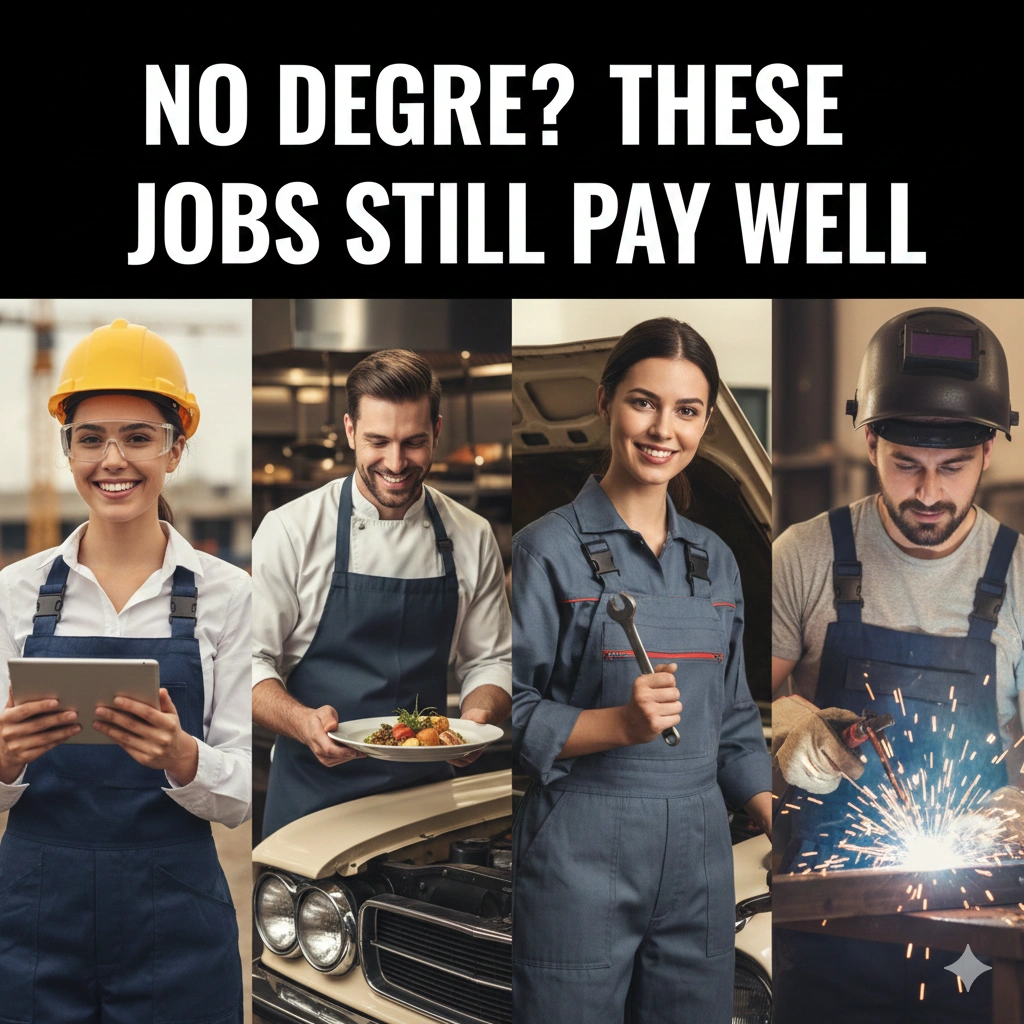
For decades, society has pushed one dominant idea: get a degree or struggle financially. Parents, teachers, and career counselors often treat college education as the only path to success. But in 2025, that belief is no longer fully true.
While degrees still matter in many professions, the modern job market has changed dramatically. Technology, skill-based hiring, freelancing platforms, remote work, and industry certifications have opened doors to high-paying jobs that do not require a traditional college degree. What employers increasingly value is not a framed certificate—but practical skills, real results, and problem-solving ability.
This article explores well-paying jobs you can get without a degree, why they exist, how much they can pay, and how you can realistically enter them.
Why Degrees Matter Less Than Before
Several global shifts have reduced the dominance of formal degrees:
- Employers struggle to find job-ready talent
- Many degrees are outdated by graduation
- Technology evolves faster than universities
- Online learning is cheaper and more practical
- Skills can be proven through portfolios and experience
As a result, many companies now prioritize skills, certifications, and performance over academic background—especially in tech, creative, operations, and trade-based roles.
What “High-Paying” Means Without a Degree
“High-paying” doesn’t always mean millionaire-level income overnight. In this article, it means:
- Income above average entry-level salaries
- Strong long-term earning growth
- Opportunities for freelancing or self-employment
- Skills that scale globally
Many people in these roles earn more than degree holders, especially when experience grows.
1. Software Developer (Self-Taught / Bootcamp)
Why It Pays Well
Software runs the modern world. Companies care more about whether you can build systems than where you studied.
How to Enter Without a Degree
- Learn programming languages (Python, JavaScript, Java)
- Build real projects
- Contribute to open-source
- Use coding bootcamps or online platforms
Income Potential
Mid to high income with experience, freelancing, or remote global work.
2. Digital Marketing Specialist
What They Do
Manage online growth through SEO, ads, social media, email marketing, and analytics.
Why Degrees Aren’t Required
Digital marketing changes constantly. Practical results matter more than theory.
Skills Needed
- SEO
- Google Ads
- Social media strategy
- Analytics tools
Income Streams
- Agency jobs
- Freelancing
- Consulting
- Personal brands
3. UI/UX Designer
Why It Pays Well
Every app, website, and digital product needs good design. User experience directly affects revenue.
Entry Without Degree
- Learn design tools (Figma, Adobe XD)
- Study UX principles
- Build case studies
- Create a portfolio
Key Advantage
Strong portfolios outperform degrees.
4. Data Analyst (Non-Degree Path)
What They Do
Turn raw data into insights for businesses.
How to Enter
- Learn Excel, SQL, Python
- Practice with real datasets
- Earn short certifications
Why It Pays
Data-driven decisions are critical across industries.
5. Cybersecurity Technician
Why This Role Exists
Cyber threats are increasing faster than universities can train professionals.
Entry Path
- Certifications
- Hands-on labs
- Network and system knowledge
Career Growth
Security roles scale rapidly with experience.
6. Cloud Support & DevOps Technician
What They Do
Manage servers, cloud platforms, automation, and system reliability.
Skills Needed
- Linux
- Cloud platforms
- Automation tools
Why No Degree Needed
Certifications and experience are more important.
7. Video Editor & Motion Designer
Why It Pays Well
Video dominates digital content—marketing, education, entertainment.
Entry Path
- Learn editing software
- Build samples
- Freelance globally
Income Growth
Depends on niche, speed, and creativity.
8. Sales Professional (Tech / B2B)
Why Degrees Don’t Matter
Sales rewards results, not certificates.
Skills Required
- Communication
- Negotiation
- Relationship building
High Earnings
Commission-based roles can surpass many degree jobs.
9. SEO Specialist
What They Do
Improve website visibility on search engines.
Why No Degree Is Needed
SEO success depends on real rankings and traffic—not theory.
Entry Strategy
- Learn SEO fundamentals
- Practice on your own sites
- Show results
10. Freelance Writer & Content Strategist
Why It Pays
Brands need content constantly.
Entry Without Degree
- Strong writing skills
- Portfolio
- Understanding of niches
Growth Paths
- Blogging
- Copywriting
- Content management
11. IT Support & Systems Technician
What They Do
Fix systems, networks, and technical issues.
Entry Path
- Certifications
- Practical troubleshooting skills
Why It’s Reliable
Every organization needs IT support.
12. Skilled Trades (Electrician, Plumber, HVAC)
Why These Jobs Pay Well
- Shortage of skilled workers
- Essential services
- Cannot be automated
Entry
- Apprenticeships
- Licensing
Long-Term Stability
Extremely strong.
13. Social Media Manager
Why It Pays
Businesses rely on online presence for growth.
Skills Needed
- Content creation
- Analytics
- Platform understanding
Degree Not Required
Results matter more than education.
14. Virtual Assistant / Operations Coordinator
What They Do
Manage schedules, emails, tools, and workflows remotely.
Why It Pays
Entrepreneurs and startups outsource operations.
Skills Needed
- Organization
- Tools knowledge
- Communication
15. Real Estate Professional
Why No Degree Is Needed
Licensing and market knowledge matter more.
Income Potential
Commission-based, high upside.
Skills That Replace Degrees
Across all these jobs, success depends on:
- Continuous learning
- Strong portfolios
- Real-world experience
- Communication skills
- Problem-solving ability
Degrees may open doors—but skills keep them open.
How to Start Without a Degree
- Choose a skill-based field
- Learn through online platforms
- Practice daily
- Build proof of work
- Network and apply strategically
Common Myths About No-Degree Jobs
Myth: These jobs are unstable
Reality: Many are more stable than degree-based roles
Myth: You’ll hit a salary ceiling
Reality: Skill-based roles scale faster
Myth: Employers won’t respect you
Reality: Performance earns respect
Conclusion
In 2025, a degree is no longer the only ticket to financial stability. While education remains valuable, the job market increasingly rewards people who can do, not just study.
From technology and design to trades and digital services, there are countless well-paying careers where skills, discipline, and experience matter more than formal education. For motivated learners, the lack of a degree is not a disadvantage—it can be an opportunity.
Success today belongs to those willing to learn continuously, adapt quickly, and prove their value through results.